Cement is central to modern construction and one of the largest sources of industrial carbon dioxide emissions. Much of that footprint comes from clinker, the material produced by heating limestone and other raw materials at high temperatures before grinding them into cement. Reducing the clinker content of cement can lower both process emissions and fuel-related emissions, which is why producers, customers, and policymakers are putting more pressure on lower-carbon formulations. The International Energy Agency estimates that cement production accounts for around 7 percent of global CO₂ emissions.
For cement R&D teams, however, reducing clinker is not a simple substitution. It changes the product.
Replacing a portion of clinker with supplementary cementitious materials, or SCMs, can affect early strength, setting time, workability, water demand, durability, and compatibility with admixtures. The revised cement still needs to meet the standards, performance requirements, and customer expectations associated with the product it replaces. It may require new testing, qualification, manufacturing adjustments, and supporting evidence before it can be sold at scale.
That makes lower-carbon cement an ongoing formulation and product-development challenge. The organizations that can learn quickly from past mix designs, material sources, process conditions, and performance results will have a stronger basis for responding as carbon targets, supply conditions, and customer requirements continue to evolve.
Reducing clinker changes the formulation
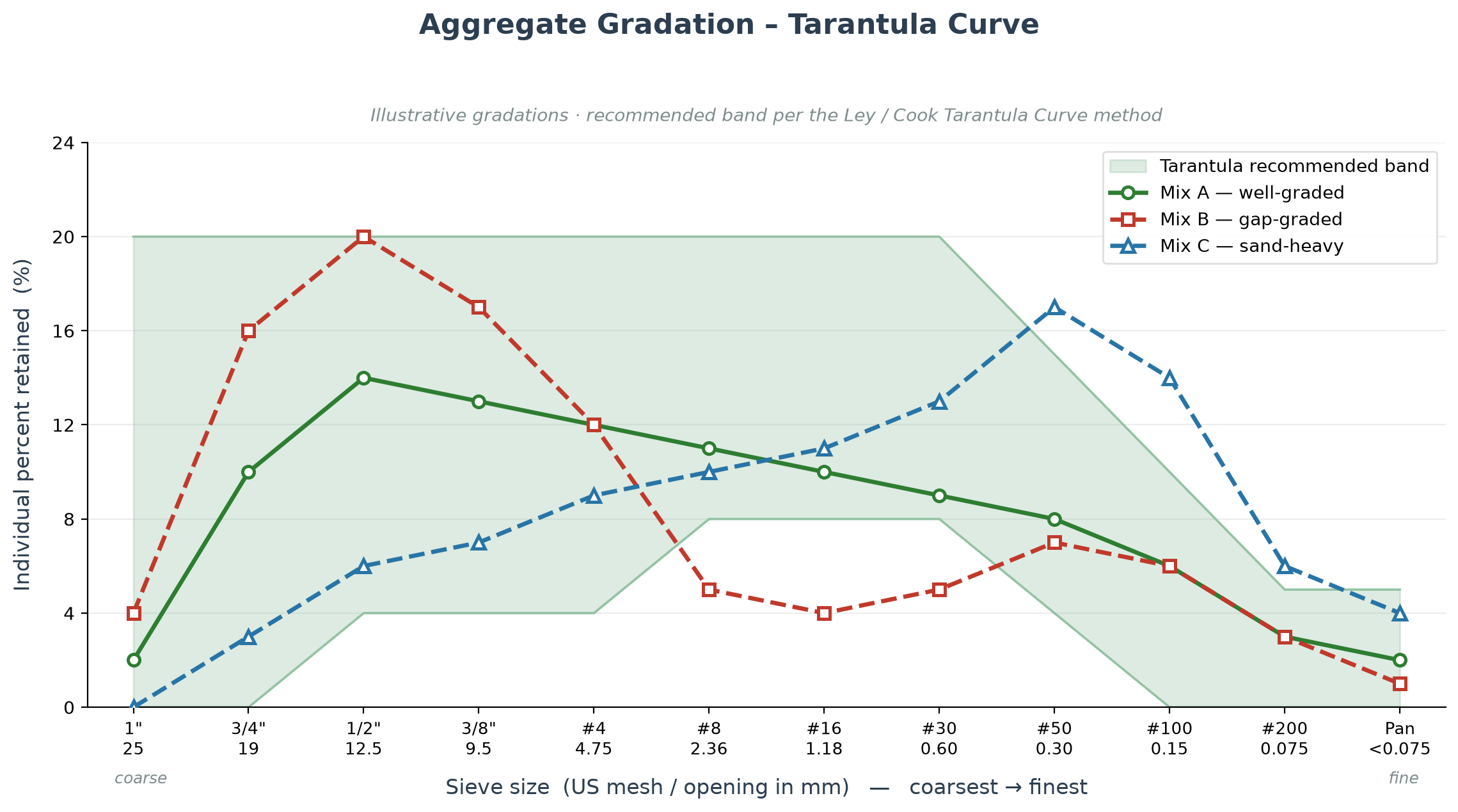
The most established route to lower-carbon cement is reducing the clinker factor by incorporating SCMs such as fly ash, ground granulated blast-furnace slag, calcined clay, limestone, natural pozzolans, or other suitable materials.
Each option introduces a different set of technical tradeoffs.
A higher proportion of some SCMs may slow early strength development. It may alter setting behavior, require changes to water demand or admixture dosage, or affect durability under conditions such as sulfate exposure, chloride ingress, freeze-thaw cycling, or carbonation. The impact depends on the cement system, the SCM chemistry and physical characteristics, the replacement level, the manufacturing process, and the intended application.
The formulation work therefore extends beyond finding a material that can replace clinker on paper. Teams need to understand how a particular source behaves in a specific mix, whether the resulting product meets relevant requirements, and how consistently it can be manufactured across sites and lots.
Supply variability increases the workload
The availability and characteristics of traditional SCMs are changing.
Fly ash availability can be affected by changes in coal-fired power generation. Slag supply can vary with steel-production routes, regional infrastructure, and competing demand. Producers are increasingly evaluating calcined clays, limestone, natural pozzolans, recycled materials, and other alternatives to broaden their options.
These materials are not interchangeable.
A calcined clay from one deposit may differ from another in mineralogy, reactivity, fineness, impurity profile, and processing history. Those differences can affect water demand, strength development, setting, rheology, color, and durability. A material that performs well in one formulation or plant may require a different treatment elsewhere.
Cement producers therefore need to manage more than a one-time reformulation program. They need a repeatable way to evaluate changing materials, compare them with past work, and determine where previous evidence applies.
Testing creates long feedback cycles
Cement development involves tests that can take weeks or longer to produce meaningful results.
Compressive strength is commonly evaluated at several intervals, including 7, 28, and sometimes 56 or 90 days. Durability testing can require longer exposure periods, depending on the property and standard involved. Every candidate mix uses laboratory capacity, materials, equipment, and technical attention while the team waits for evidence that a formulation is ready to advance or needs further work.
Those feedback cycles make experiment selection important.
If a team cannot find prior mix designs, SCM characterizations, process conditions, or strength data, it may repeat work that could have informed the next formulation. That does not mean historical results should be reused automatically. Cement behavior depends on source material, mix design, curing conditions, test method, and product requirements. But prior work can help researchers identify comparable materials, understand likely tradeoffs, and focus new testing on the uncertainty that remains.
The ability to retrieve and interpret that history becomes more valuable when every iteration takes time.
Connected records help teams learn faster
A useful cement R&D record connects the mix design to the materials and conditions that shaped its performance.
That includes clinker factor, SCM type and replacement level, material source, lot or characterization data where relevant, admixture system, water-to-binder ratio, mixing procedure, curing conditions, test methods, results, and observations. It should also preserve the product or application context, such as target strength class, customer requirement, manufacturing site, and relevant environmental or durability expectations.
When these records are captured in structured, connected form, a formulator can search past work by SCM type, source, fineness, replacement level, strength profile, admixture use, or target application. A team evaluating a new clay source can begin by reviewing the closest available analogs rather than treating every new material as completely unknown.
This supports better experimental design. Instead of changing one variable at a time across a large number of trials, teams can use designed experiments to evaluate the interaction among clinker factor, SCM blend, admixture dosage, and process conditions. Predictive models may become useful when the underlying data is sufficiently consistent, contextualized, and representative of the decision at hand.
The sequence matters. Reliable analysis depends on records that preserve the material, formulation, method, and process context behind each result.
Carbon claims require traceable evidence
Lower-carbon cement only creates commercial value when the organization can support its environmental claims with credible evidence.
Construction customers increasingly request information about embodied carbon, composition, environmental product declarations, and product-specific environmental performance. EU Regulation 2024/3110 creates the legal framework for a construction-product Digital Product Passport system. The regulation provides for the European Commission to establish the system through delegated acts and specifies that the passport must be linked to the product type and unique identification code, accessible electronically through a data carrier, and contain defined product information.
For cement producers, the evidence behind a carbon claim begins long before a declaration is prepared.
It includes the composition of the mix, the source and characteristics of the materials, manufacturing conditions, energy and emissions data, and the product definition that applies to the finished cement. A formula revision, supplier substitution, or site transfer can change the evidence supporting an earlier claim.
Teams that preserve these relationships as part of R&D, quality, and production work are better positioned to prepare supporting documentation when customers, regulators, or internal stakeholders request it. Teams that rely on disconnected spreadsheets and retrospective data collection may still assemble the information, but the work will take longer and carry more uncertainty.
A practical starting point
Cement producers do not need to centralize every historical record before improving low-carbon formulation work.
Start with a recurring decision, such as qualifying a new SCM source, reducing clinker in an existing cement family, responding to a supply constraint, or preparing evidence for a customer carbon request. Map the information needed for that decision: mix designs, material sources, characterization data, process conditions, test methods, strength and durability results, product requirements, and approvals.
Then identify where the relationships break.
If a formulator cannot tell which source was used in a historical mix, compare results across similar conditions, or find the evidence that supported a prior approval, those are the first issues to address. Over time, the organization can extend the connected record across more product families, sites, and workflows.
Lower-carbon cement will continue to require technical judgment, testing, and qualification. Structured, connected R&D data gives teams a more reliable way to use the evidence they have already generated, focus new experiments, and support the claims associated with the products they bring to market.
Where Uncountable Fits
Uncountable gives cement R&D teams one place to capture mix design, SCM characterization, process parameters, and performance data as structured, connected records. These records are searchable by what is in the mix and linked to the source and lot behind every result. Teams can match new SCM sources to historical analogs, navigate the clinker‑reduction and performance trade‑off with real data, run designed experiments and predictive models on their own history, and carry the traceable record that embodied‑carbon reporting depends on.
For cement producers that need to move faster on low‑carbon reformulation, Uncountable’s platform turns scattered mix files and test reports into a unified, queryable history of how composition, process, and performance interact. The result is faster low‑carbon cement development and a carbon story backed by data rather than reconstruction.
Want to see what structured cement R&D data looks like in practice? Request a demo now

.png)