
Uncountable Blog
Practical insights for R&D, quality, and operations leaders building better data foundations, accelerating innovation, and bringing products to market with confidence.
.png)
How to shorten the design-make-test-analyze loop in formulation R&D
AI-guided experiment design can cut the number of runs a project needs. The DMTA loop only gets shorter when results reach the next design decision faster, and that depends on structured data and scientists who trust the model...
.png)
Unexposed plates, discarded failures: what FDA's recent warning letters say about QC lab records
Unexposed EM plates recorded as sampled. Failing samples discarded before analysis. Two recent FDA warning letters show how QC records can drift from what happened, and what teams should check in their own workflows...
.png)
Beyond the INCI name: what PDRN teaches us about managing biotech actives
PDRN is in launches from Primark to Dior, but the materials behind the name come from very different sources. Here's what to record about a supplier grade before you compare test results or sign off a claim.

Beyond the AI hype: rethinking the digital lab with Noel Hollingsworth
Noel Hollingsworth joins CSols to explore what holds digital labs back, from legacy LIMS architectures to scientist trust in AI, and why modernizing R&D requires more than computing power to accelerate innovation and product development.
.png)
How GLP-1 drugs are changing food formulation
GLP-1 medications are changing what some consumers need from food. See how Nestlé, Danone, and Conagra are responding, and what protein, fiber, and portion targets mean for R&D teams balancing nutrition, taste, and texture.

Uncountable Summit Europe 2026 brings R&D, quality and PLM leaders together in Frankfurt to share lessons from digital transformation
Uncountable Summit Europe 2026 brought 120 leaders to Frankfurt to share digital transformation lessons, explore connected R&D, QC and PLM, and put Bodie AI into practice through hands-on workshops.
.png)
FDA opens 139 standardized foods to salt substitutes: what R&D teams should test before reformulating
FDA’s salt substitutes rule gives food manufacturers more room to reduce sodium. Explore what changes for standardized foods, which formulation trials to prioritize, and how connected R&D data supports testing, labeling, and product launch decisions.
.png)
PFHxA restriction: what EU cosmetics and food-contact labs need on file
The EU’s PFHxA restriction now applies to cosmetics and food-contact paper and board. Learn which concentration limits apply and what records labs should keep, including supplier evidence, test results, formulation versions and batch traceability.
.png)
Freeze-thaw cycles, chain of custody and why sample history decides data quality
Explore how freeze-thaw cycles, temperature excursions, and custody records inform biobank sample suitability. Learn what handling history to capture, how to preserve aliquot lineage, and where automation can support better sample use decisions.

A lifecycle without the life: the case for a living PLM
A living PLM connects released product records to changing material costs, supplier status, and regulatory requirements. It identifies affected versions and supports reassessment through formal review without automatically changing approved products.
.png)
Bill of materials vs. bill of substances: what your product structure needs to explain
A bill of materials describes components; a bill of substances describes chemical composition. Learn how these views connect with formulas to support product impact assessments, cost calculations, and compliance reviews.
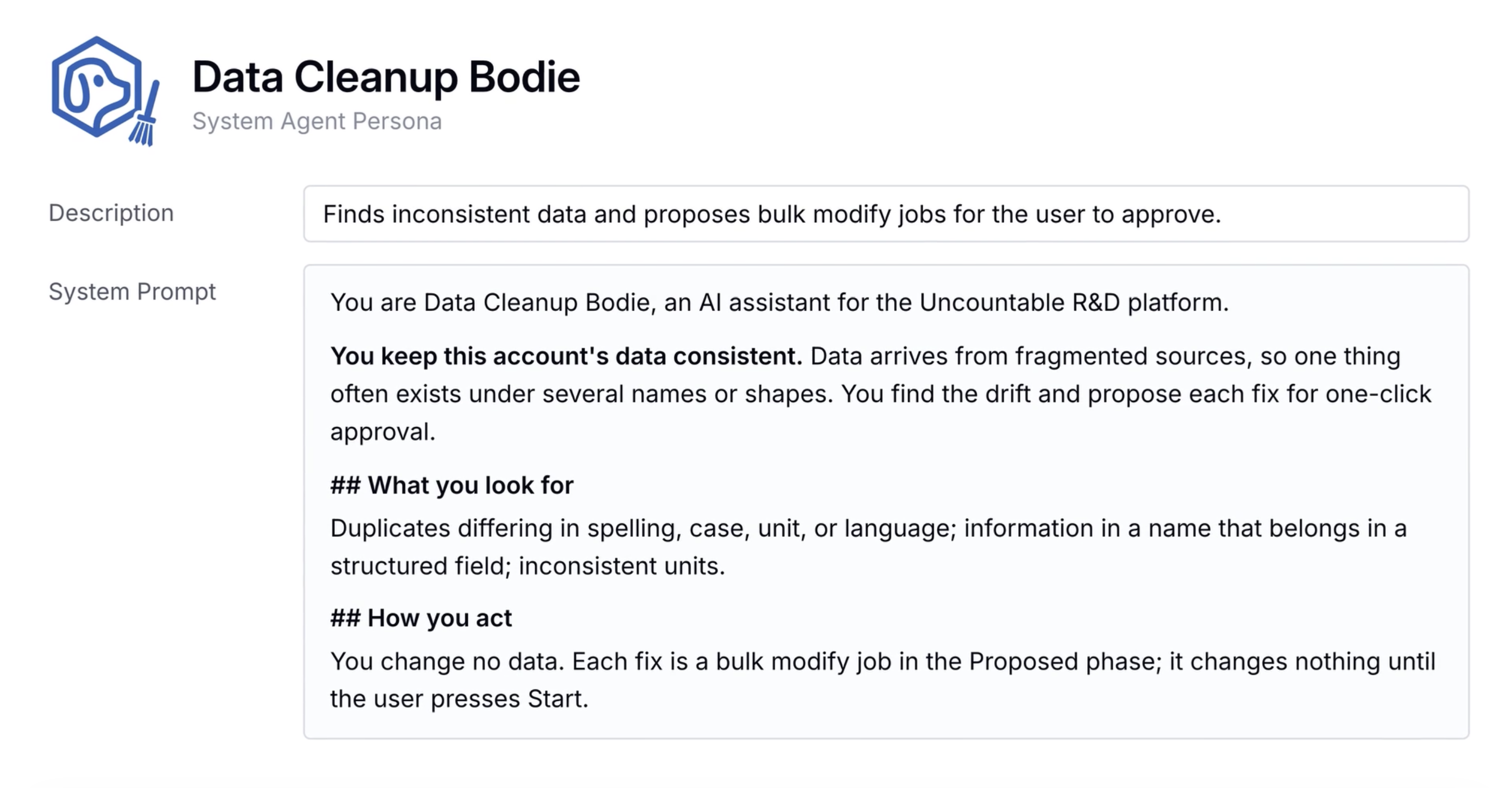
Introducing Agent Personas: an AI agent for every task
Agent Personas in Uncountable let teams give Bodie, the platform's AI assistant, a defined job and a schedule, from weekly data cleanup to Monday lab reports. Agents run with the user's permissions and propose changes that wait for approval.
.png)
More AI, more work? The product development paradox
AI promises faster product development. But without connected data, trusted context, and clear workflows, it can create more work, not less.
.png)
Why coating defects keep coming back: the missing link between formulation, process, and quality data
Coating defects are rarely caused by one variable. Connected formula, process, raw-material, application, and quality data helps teams investigate root causes faster, prevent repeat failures, and preserve knowledge across R&D and manufacturing.
.png)
Uncountable launches Regulatory Management capability, moving ingredient checks into the formulation workflow
Uncountable’s Regulatory Management checks recipe ingredients against market-specific requirements as formulations are built, giving teams pass/fail visibility, cited evidence, and early warnings before noncompliant recipes move downstream.
.png)
Mobile LIMS for test and material data
Unify formulation, raw material, sample, and test-result data with mobile quality control LIMS software. Give quality control laboratories connected workflows, complete traceability, and faster decisions from sample receipt through release.

From pilot to global platform: how Sika is scaling its digital laboratory
At WAC 2026, Sika and Uncountable shared how the Nuage digital laboratory program is connecting global R&D data, automation, and AI to reduce experiments and accelerate formulation development.
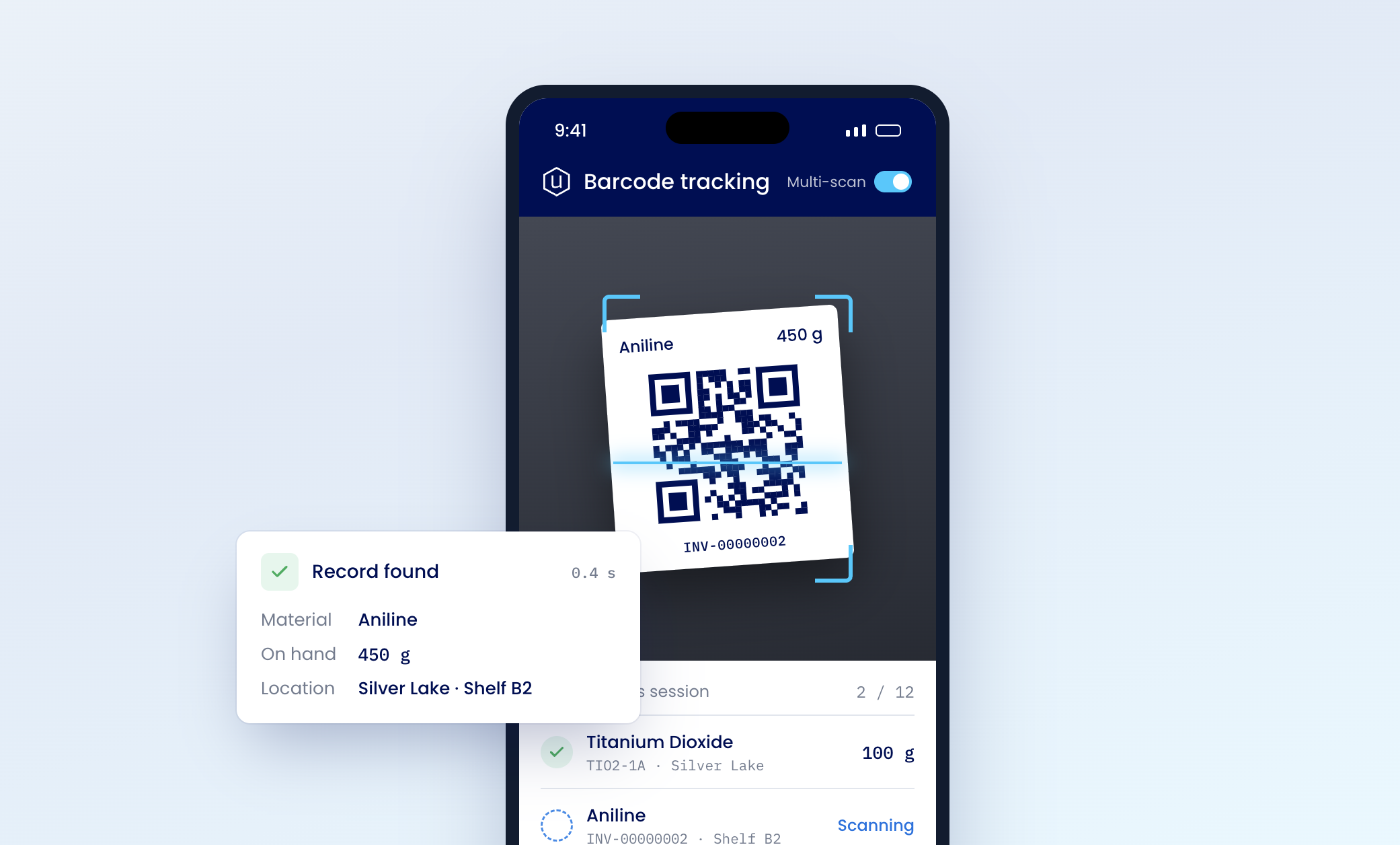
Mobile lab data capture: where a phone actually helps
Mobile data capture can reduce the gap between lab work and lab records. Learn where information is lost, when mobile helps, and why scans, quantities, and photos must connect directly to the system of record.
.png)
LIMS vs. SDMS: which system manages raw instrument data?
LIMS manages samples, tests, and laboratory workflows. SDMS captures and preserves raw instrument files. Learn where each system fits, when LIMS alone is sufficient, and when laboratories need both.
How Clariant built a connected R&D data foundation for faster innovation
Clariant is using Uncountable to connect global R&D workflows, make scientific data easier to reuse, and build a foundation for analytics and AI across more than 1,000 users and 35+ sites.

Live from Rethink! Smart Manufacturing Europe 2026: digital transformation in product development starts with data
AI initiatives depend on more than algorithms. Learn how connected data across R&D, quality, and PLM supports faster, more resilient product development.
.png)
CDS vs. SDMS: what is the difference?
CDS and SDMS both support laboratory data integrity, but they do different jobs. Learn where chromatography data is acquired and processed, where scientific records are retained, and when regulated labs need both systems.
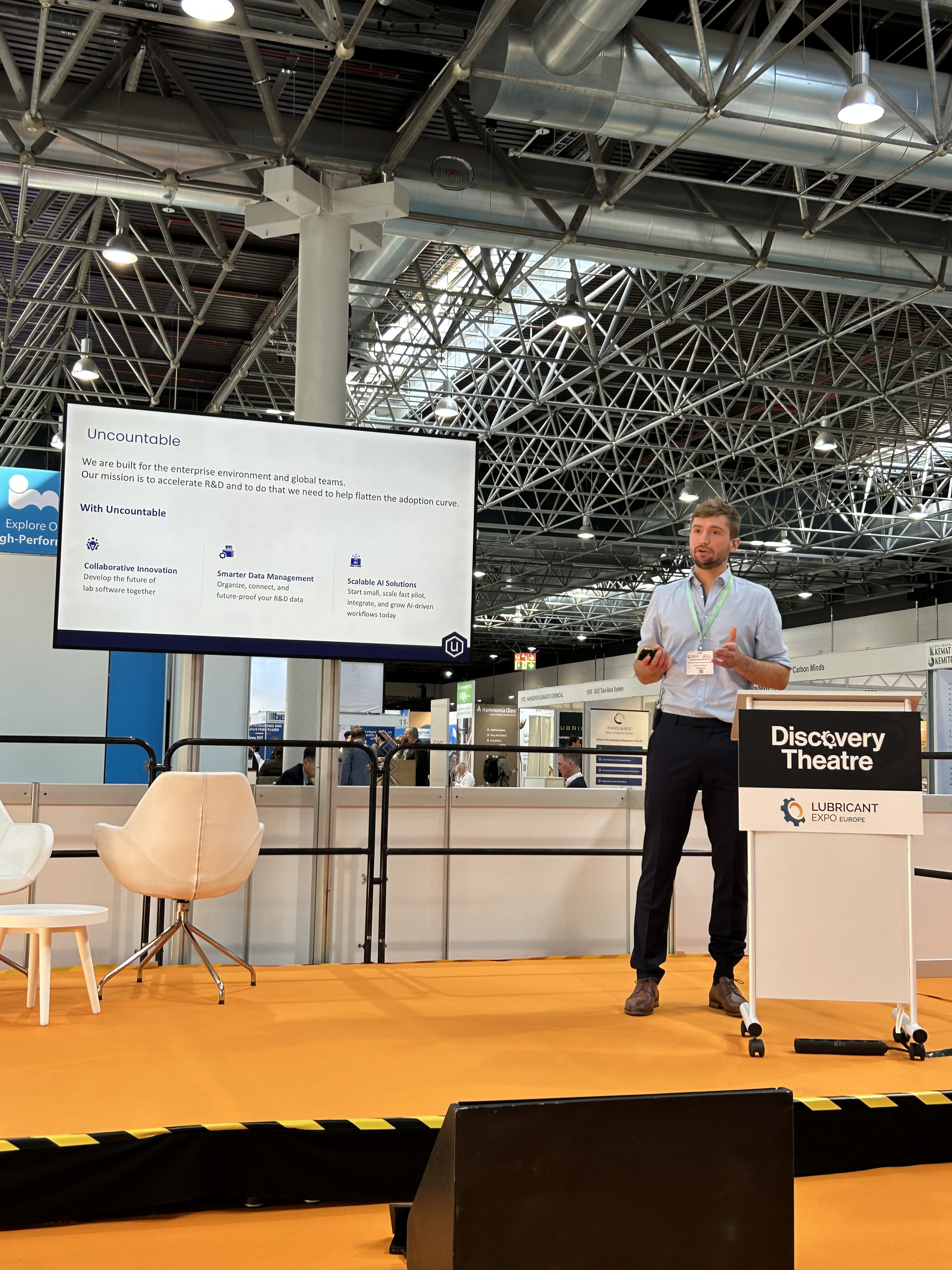
Live from Lubricant Expo Europe 2026: AI-ready R&D starts with connected product data
AI in formulation and materials R&D depends on connected, trusted data. Learn why fragmented product records hold AI back, and how a unified product-data foundation makes it useful in everyday R&D work.
.png)
Reformulating an icon: inside Beiersdorf’s push to make 140 years of R&D data work harder
Beiersdorf is using structured R&D data and machine learning to help reformulate iconic skincare products for a lower environmental footprint, while maintaining the safety, performance, and sensory experience consumers expect.
.png)
Suggest with AI for unified R&D product information
Suggest with AI helps enterprise R&D teams connect fragmented product information across lab systems, experiments, documents and specifications, so scientists can find relevant knowledge, reuse prior work and decide what to test next.
.png)
How to choose the right LIMS for specialty chemicals QA and QC
A practical guide to choosing a LIMS for specialty chemicals QA and QC: the criteria that matter, platform categories to compare, demo scenarios to request, and how to build a shortlist.
.png)
Why data foundations matter for the future of lubricant R&D
Lubricant innovation increasingly depends on accessible, connected formulation and testing data. Learn why strong data foundations are essential for faster R&D and effective AI adoption.
.png)
A COA is not a template: why quality data should generate the certificate
A Certificate of Analysis is more than a template. Treating COAs as governed outputs of approved quality data, not manually assembled documents, reduces errors, speeds turnaround, and keeps every certificate traceable to its source.
_1.png)
3D scatter charts: plot three properties, color in a fourth
Explore Data now supports 3D scatter charts, so R&D and QC teams can plot three properties at once, color by a fourth, and rotate the view to catch groupings, outliers, and spec compliance that a flat chart can hide.
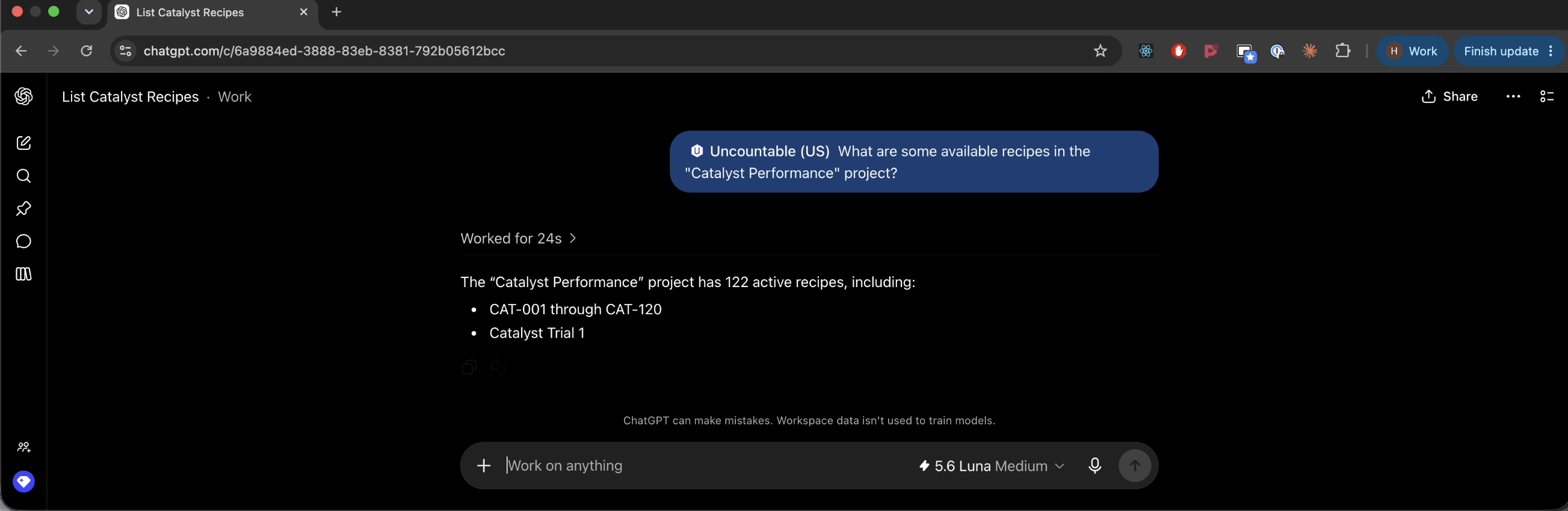
Uncountable is now available as a plugin inside ChatGPT for US-hosted customers
Uncountable is now available as a Plugin inside ChatGPT for US-hosted customers, bringing governed formulation, quality, and project data into the conversations where teams work.
.png)
Document management for cosmetics companies: the compliance foundation behind faster, safer product launches
Learn how cosmetics companies can control formulas, PIFs, safety data, claims, labels, batch records, and product changes. Better document management strengthens compliance, traceability, and faster product launches.
.png)
Your carbon claims are about to need receipts
EU rules taking effect September 27, 2026 will raise the standard for consumer-facing carbon claims. Learn why traceable formulation, supplier, footprint, and change-control data are essential to keep claims accurate as products evolve.
.png)
From grain and bond to grinding performance: the missing record in abrasives R&D
Abrasive performance depends on more than grain and bond. Learn how porosity, process conditions, test parameters and application data help teams reduce blind iteration and develop more reliable products.
.png)
The “almost approved” product: where commercialization really gets stuck
Products often stall near launch because R&D, quality, supplier, regulatory and manufacturing evidence is disconnected. Learn what a launch-ready product record needs before technical progress becomes approval.
.png)
Why adhesive formulas fail at scale: the process data teams need before transfer
An adhesive formula can work in the lab but fail in production when process context is lost. See why mixing, temperature, cure, materials and application conditions must stay connected to performance data.
.png)
What happens when a test method changes? The hidden risk to product and quality data
A changed test method can make historical quality data difficult to compare. Learn how method versions, instruments, specifications and validation evidence protect product decisions, trend analysis and audit readiness.
.png)
FDA QMSR is now effective: a readiness review for device teams
FDA’s QMSR is now effective. This readiness review helps medical-device quality teams check controlled procedures, training, evidence retrieval, inspection readiness and digital quality workflows under amended 21 CFR Part 820.
.png)
Your R&D AI is only as useful as the experiment context behind it: building trustworthy tech
An AI assistant can find past experiments, but only connected context shows whether they apply. Learn which material, formula, process, method, and status data R&D AI needs so scientists can inspect and trust its answers.
.png)
The formula behind a flavor change
A beverage ingredient that matches its specification can still change flavor, color, or mouthfeel. Here is how to map the change, match evidence to risk, use sensory testing well, and approve a clearly defined substitution.
.png)
When “within specification” is not enough for an industrial-biotech ingredient
A batch can meet every release criterion and still behave differently in a customer application. This article explains when a specification result is enough, and when industrial-biotech teams need connected process, application, and quality evidence.
.png)
Why eQMS migration is an audit-readiness project, not just an IT project
An eQMS migration changes how quality evidence is created, controlled, retrieved, and explained. Learn how to preserve audit readiness across active workflows, historical records, archives, and cutover.
.png)
The qualification record behind every electronics material change
Learn how a traceable qualification record helps electronics-material teams assess supplier, formulation and process changes without late-stage surprises.
.png)
When the line sensors knew first
Historian data often captures process drift before QC detects an out-of-spec result. Learn how petrochemical teams connect sensor trends, recipes, batches, and QC results to speed root-cause analysis.
.png)
The top 10 PLM pain points for formulation teams
PLM fails formulation teams when product data becomes a collection of disconnected formulas, specifications, revisions, and files. These ten pain points show where the product record breaks down.
.png)
The thermal history problem: connecting processing conditions to material performance
A thermal profile is not background information. In glass and ceramics, it can determine the properties a team is trying to measure. Here is why it should be part of the connected material record.
.png)
How global spirits teams protect house style across markets and production sites
Global spirits teams can protect house style across markets by connecting formula, ingredient, process, sensory and quality evidence.
.png)
The top 10 QMS pain points for quality leaders
Quality leaders rarely struggle because they lack a QMS module. They struggle when documents, events, CAPAs, training, suppliers, and product changes are disconnected. Here are ten QMS problems that keep resurfacing.
.png)
The data disappears at the factory gate: why the R&D-to-manufacturing handoff keeps failing
R&D-to-manufacturing handoffs fail when the specification moves downstream but the development context does not. Learn how connected formulation, process, QC, and lifecycle data help teams trace scale-up issues back to the evidence.
Ask your data: the questions R&D and quality leaders should be able to answer
R&D and quality leaders ask the questions that shape strategy: where are we duplicating work, which projects are at risk, are we capturing what our people know? Here are the questions connected data answers without a fire drill.
.png)
One data layer, two jobs: how QC and QMS should actually connect
QC and QMS do different jobs. QC records samples, tests, specifications, and results. QMS governs deviations, CAPAs, and controlled changes. The strongest quality workflows keep those jobs distinct while connecting the evidence.
.png)
Fat fingers, bad decisions: the hidden cost of manual data entry in R&D
Manual data entry errors rarely stay small. A mistyped unit, result, ingredient level, or sample ID can distort analysis and send R&D teams toward the wrong next experiment. Structured data reduces the errors that lead to bad decisions.
.png)
How companies manage recipes, processes, and specifications in PLM
Formulation-based products need more than a parts list. This guide explains how to evaluate PLM for recipes, sub-recipes, held cost roll-up, version history, and raw-material impact across the product portfolio.
.png)
7 Things to check in a 21 CFR Part 11-ready ELN
A Part 11-ready ELN needs more than an audit log and an approval button. Use this seven-point checklist to assess audit trails, access controls, e-signatures, validation evidence, retention, exports, and controlled workflows.
.png)
Analytics vs experimentation: two different jobs for your R&D data format
Analytics and experimentation are both called AI, but they do different jobs: one explains your past results, the other proposes your next experiment. This piece breaks down the distinction and why both depend on structured R&D data first.
.png)
When compliance becomes a formulation problem
Food additive compliance is no longer a final regulatory check. Changing federal rules, state restrictions, and global divergence now create reformulation work across portfolios.
.png)
Best QMS for manufacturing and R&D quality teams in 2026
The best QMS for your team is not simply the one with the most workflows. It is the one that gives every CAPA, deviation, and change-control decision the right evidence, from the QC result and specification to the development history behind it.

Ask your data: the portfolio questions behind every big R&D bet
Portfolio leaders ask the questions that decide where the money goes: which projects to prioritize, what is the risk and expected return, where to invest limited resources? Here are the questions connected data helps you answer with evidence.
.png)
Your biobank runs on spreadsheets. Here's what that costs
Learn when spreadsheets stop supporting reliable biobank sample management. Explore the costs of missing records, five signs it’s time for a LIMS, and what to fix before migrating your inventory.
.png)
ISO 9001:2026 is here. Is your quality evidence ready?
ISO 9001:2026 was published in September 2026. Learn why the real transition work is making your quality system's evidence traceable, not rewriting every procedure.
.png)
Do you have to replace your LIMS to adopt a PLM?
A new PLM does not automatically require a LIMS replacement. This guide explains how the two systems differ, when a one-time product-data load is enough, when integration matters, and when a legacy LIMS may be the real constraint.
.png)
ISO/IEC 17025 accreditation is an evidence problem before it is an audit problem
Prepare for ISO/IEC 17025 accreditation by testing whether your laboratory can retrieve and explain the full evidence behind a completed result.
.png)
What causes compliance gaps in lab data software?
Compliance gaps in lab data software usually come from disconnection: audit trails separated from records, manual re-entry, weak links between QC and QMS, and drifting specifications.
.png)
The data problem behind sustainable coatings reformulation
Raising bio-based or recycled content in a coating is a grade problem, not a quantity problem, and it comes with real trade-offs in cost and performance. This piece argues sustainable coatings reformulation is fundamentally a data challenge.
.png)
Clean beauty reformulation is a data problem
Clean beauty claims create a continual reformulation grind across a whole portfolio, and spreadsheets can't keep up. This piece argues the real bottleneck is data: tracing composition, versions, and claims evidence at scale.
.png)
One material change should not cost you a month
In material-intensive manufacturing, one ingredient change ripples through every product, spec, and test. See how a PLM and QA/QC platform built for formulations keeps it all on one connected record, so nothing downstream is missed.
.png)
When a restricted substance becomes a portfolio change
A restricted substance can sit in dozens of formulas, blends, and products. Here is how connected PLM data and where-used analysis help chemical teams scope the impact and run a controlled portfolio change.

Ask your data: the PLM questions that should not take a meeting to answer
Product teams ask the same questions every day: what changed between versions, what depends on this ingredient, where is this in the stage-gate? Here are the questions a connected PLM answers in seconds, so a change never blindsides you.
.jpg)
QC in your ERP vs a purpose‑built LIMS
Many manufacturers run QC inside their ERP because it is already there. This explains what ERP quality modules do well, where they run out of room on specs, instruments, and R&D linkage, and when a purpose‑built quality control LIMS better fits.
.png)
Best materials informatics platforms in 2026
Materials informatics tools now range from prediction engines to full R&D platforms. This guide explains the main categories, the data-structure and workflow questions that matter most, and how to test a platform against real work.
.png)
From “filter, filter, filter” to “just ask”
Most R&D software still relies on menus and filters, making scientists do the system’s work. This article explains the shift to AI‑first workflows, where natural‑language requests act on structured lab data and “just ask” returns real answers.
.png)
ISO 9001 certification and ISO/IEC 17025 accreditation are not the same thing
ISO 9001 certifies an organization's quality management system. ISO/IEC 17025 accredits a lab's technical competence for a defined scope. Here's the real difference, and what it means for the evidence a quality platform should support.
.png)
Automotive EV PLM: managing battery materials, configuration changes, and product traceability
Automotive PLM helps manufacturers manage increasing vehicle complexity, from electric powertrains and software integration to product variants and supplier collaboration. Learn how PLM supports faster innovation and more efficient development.
.png)
PLM implementation for formulation-based manufacturers
A practical implementation guide for formulation manufacturers: how to scope the rollout, define the data model, govern ownership, integrate systems, migrate records, drive adoption, and measure operational outcomes.
.png)
Cosmetic compliance data management in 2026: formulas, claims, and change control
In cosmetics, compliance fails when systems don't connect the rules to the data. This guide shows how unified R&D data delivers substance traceability, variant control, claims substantiation, and regional checks so compliance keeps pace with launch.
.png)
Quality control LIMS for food and beverage: from line sample to release
Food and beverage QC is high-volume, repetitive, and time-critical, with safety on the line. Here is what a quality control LIMS should do from the moment a line sample enters the lab to product release.
.png)
6 Reasons your chemistry data isn't as usable as you think
Chemistry R&D teams rarely lack data; they lack usable data. This post breaks down the six structural problems that make R&D data hard to query, compare, and learn from, from instrument formats to missing context, with the fix for each.
The innovation gap is about to explode
Fixing R&D data management used to be a someday project, because the cost of waiting was invisible. It is now visible in time to market, customer stickiness, and margin. This briefing explains why the gap between fast and slow innovators is widening.

Run stage-gate reviews on evidence, not opinions
Stage-gate reviews break down when project status is typed in by hand and out of date. This piece shows how deriving status from real experiment and quality data lets R&D leaders make go, hold, or kill decisions on evidence, not opinions.
.png)
The Uncountable Portal: one controlled way in, one structured record
Not everyone who sends you data should see inside your platform. The Uncountable portal gives partners and suppliers a simple way to submit requests, samples, and results, and lands each submission in your workspace as a structured, routed record.
.png)
Petrochemical R&D: connecting feedstock, process conditions, and product performance
Petrochemical R&D generates data faster than most teams can connect it. This guide shows how an enterprise R&D platform centralizes experimental data, strengthens traceability, and speeds the decisions that move products from lab to plant.

Ask your data: the QC questions your lab should answer instantly
QC labs ask the same questions on every shift: is this sample in spec, why did it fail, what did we do last time? Here are the questions a connected quality control LIMS answers in seconds, with the traceability to back up every result.
.png)
Complaint management: turning a customer complaint into a closed-loop investigation
A customer complaint should trigger a closed-loop investigation, not sit in an inbox. Here is how connected complaint management turns feedback into root cause, corrective action, and a documented resolution.
Uncountable earns Frost & Sullivan’s 2026 Technology Innovation Leadership Recognition for global integrated pharmaceutical R&D platforms
Uncountable has earned Frost & Sullivan's 2026 Technology Innovation Leadership Recognition for Global Integrated Pharmaceutical R&D Platforms, cited for unifying ELN, LIMS, LIMS for Quality, PLM, and QMS on one structured, AI-ready data model.

How to choose a unified laboratory informatics platform in 2026
Choosing a unified laboratory informatics platform in 2026 hinges on four questions: can its AI learn from your data, is your data structured, how deep is integration, and does context survive scale-up? A guide for materials and chemicals R&D teams.
.png)
From sample bank to results: connecting stored samples to R&D data
Connect stored samples with experiments and results so scientists can trace findings to the material used. Explore how lineage, plate mapping, inventory, and AI support sample selection, data retrieval, and investigation across R&D workflows.

Pharma 4.0 needs FAIR data before it needs AI
Pharma 4.0 is pitched as a connectivity story, but AI-ready, FAIR, and connected are data problems, not machine problems. Structure your R&D and quality data first, thread it across the enterprise, then apply AI. Data first, intelligence follows.
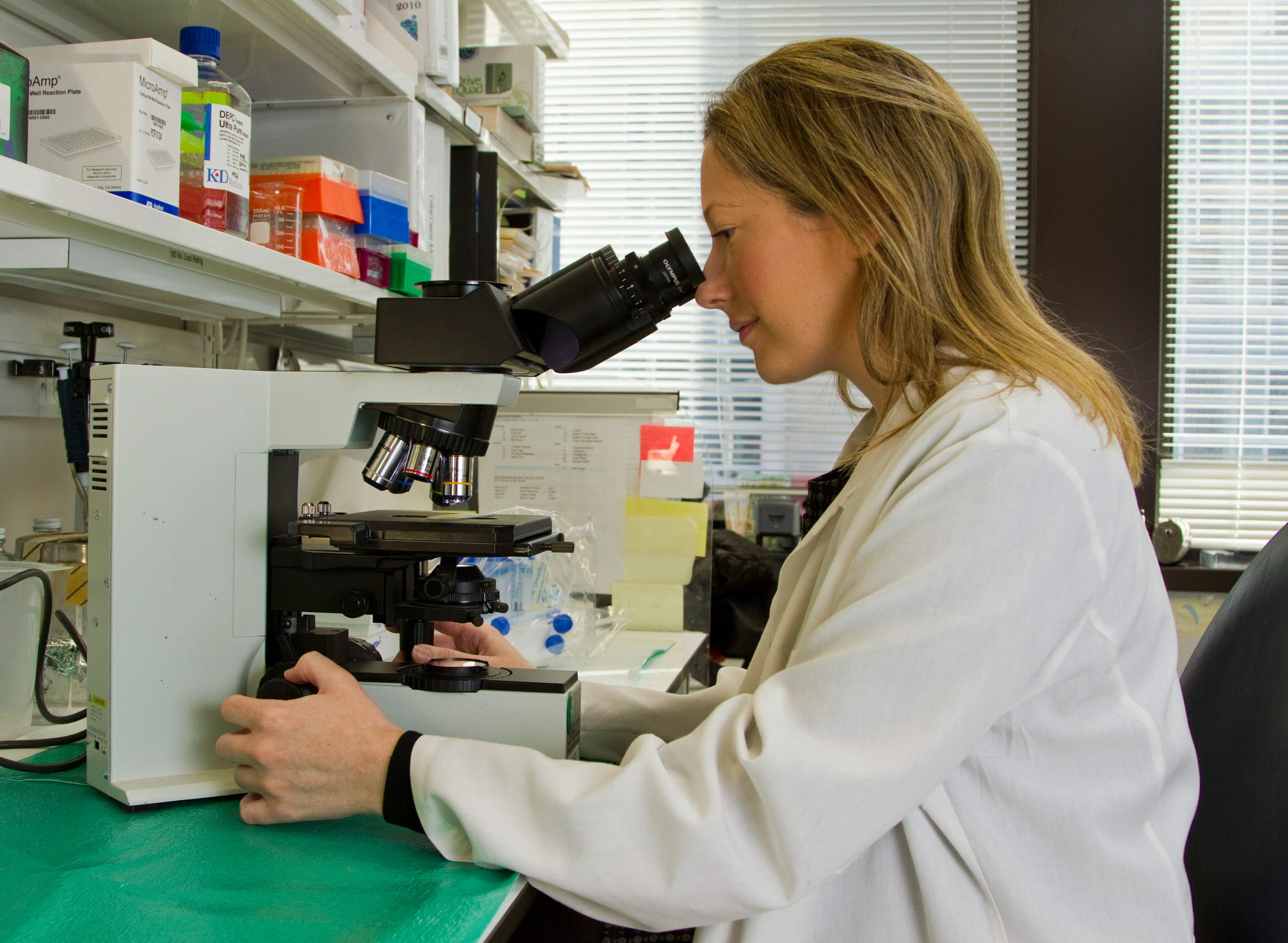
Stop throwing your best learning in the trash
Most companies trash their experimental failures. Treat every experiment as a data point with a long life, and shelved work becomes valuable again.
Ask your data: the R&D questions you can finally answer in seconds
R&D teams ask the same questions every day, from "have we made this before" to "what should we test next." Here are the questions your lab data can already answer in seconds, and how connected data and AI turn days of digging into an instant answer.

The digital product passport for construction products and coatings
The recast EU Construction Products Regulation adds a Digital Product Passport: composition, origin, embodied carbon, and reuse data. Here's what coatings and materials R&D teams should structure now so it becomes an export, not a rebuild.

Fix engineering workflows before data silos spread
Data silos rarely start as a crisis. They spread quietly across engineering workflows until no one trusts the record. This article shows how product data management reconnects fragmented work and keeps development moving on one data model.
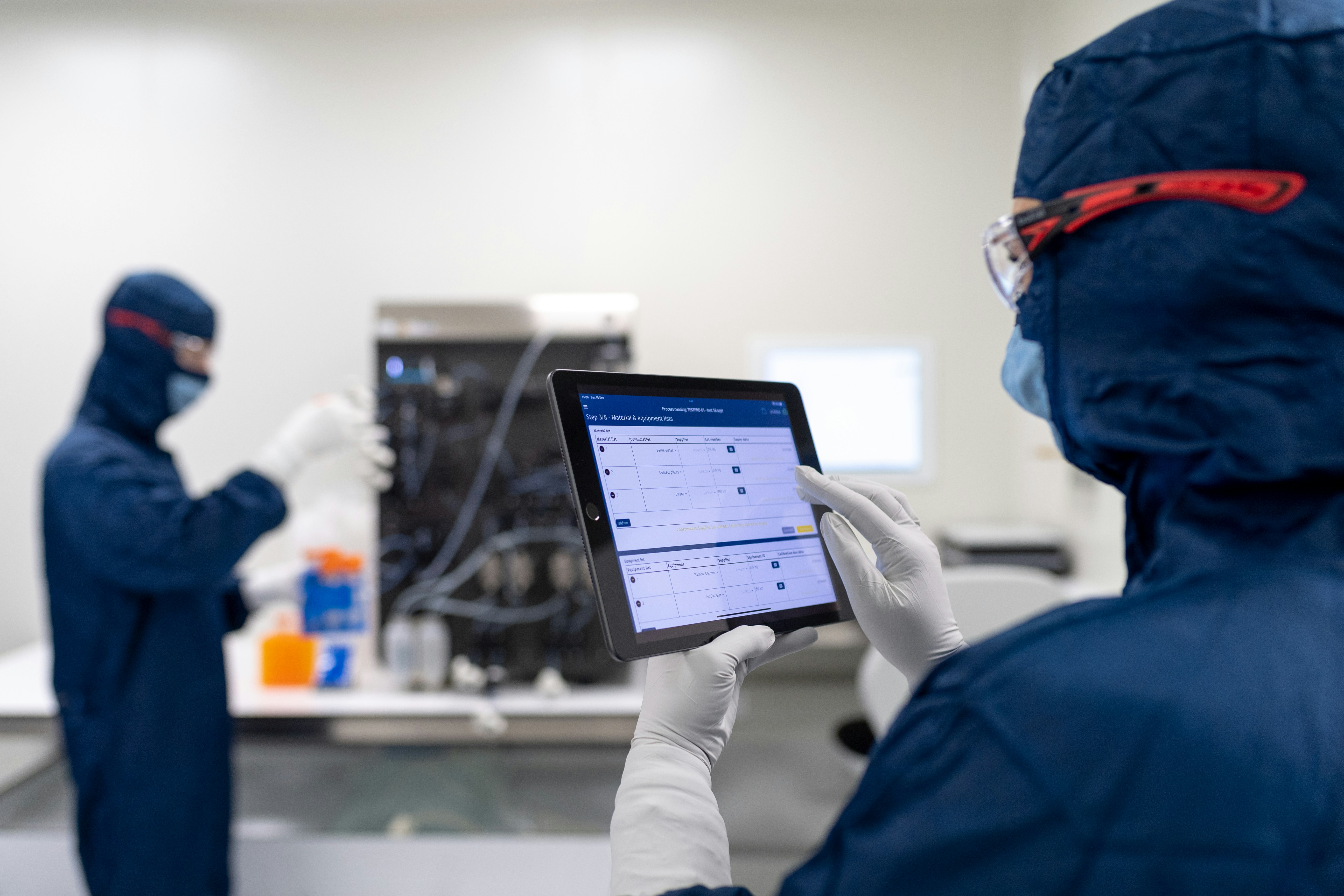
Digital product passports for materials R&D: how to prepare
The Digital Product Passport is expanding from batteries across the EU's ESPR by 2030. This guide explains what data each passport demands and why the teams that structure their R&D-to-PLM data now will be ready when their category's deadline lands.
Ask your data: the quality management questions you should never have to chase
Quality managers ask the same questions every day: which SOP version is current, are my technicians trained, where does this CAPA stand? Here are the questions a connected QMS answers in seconds, so you are always audit-ready.

Best LIMS for specialty chemicals in 2026
A 2026 shortlist of the best LIMS for specialty chemicals, compared on QC at production scale, compliance, and formulation-data fit. See where six platforms lead and where a formulation-centric LIMS pulls ahead.

Better polymers start with better data
AI is transforming polymer R&D, but only for teams whose data is structured and connected. This piece explains why a unified R&D, QC, and PLM platform is the prerequisite for useful AI.
.png)
Best cloud PLM software for R&D data in 2026
A neutral 2026 buyer's guide to cloud PLM software for R&D data. Compare the leading platforms by origin, discrete-manufacturing PLM versus scientific and formulation informatics, and see where each fits for your lab and formulation data.
.png)
Food, beverage, and FMCG formulation PLM: managing product change at scale
Food, beverage, and FMCG products quickly become product families. Formulation PLM connects formulas, variants, ingredients, labels, specifications, and quality evidence so teams can manage change across the whole portfolio.
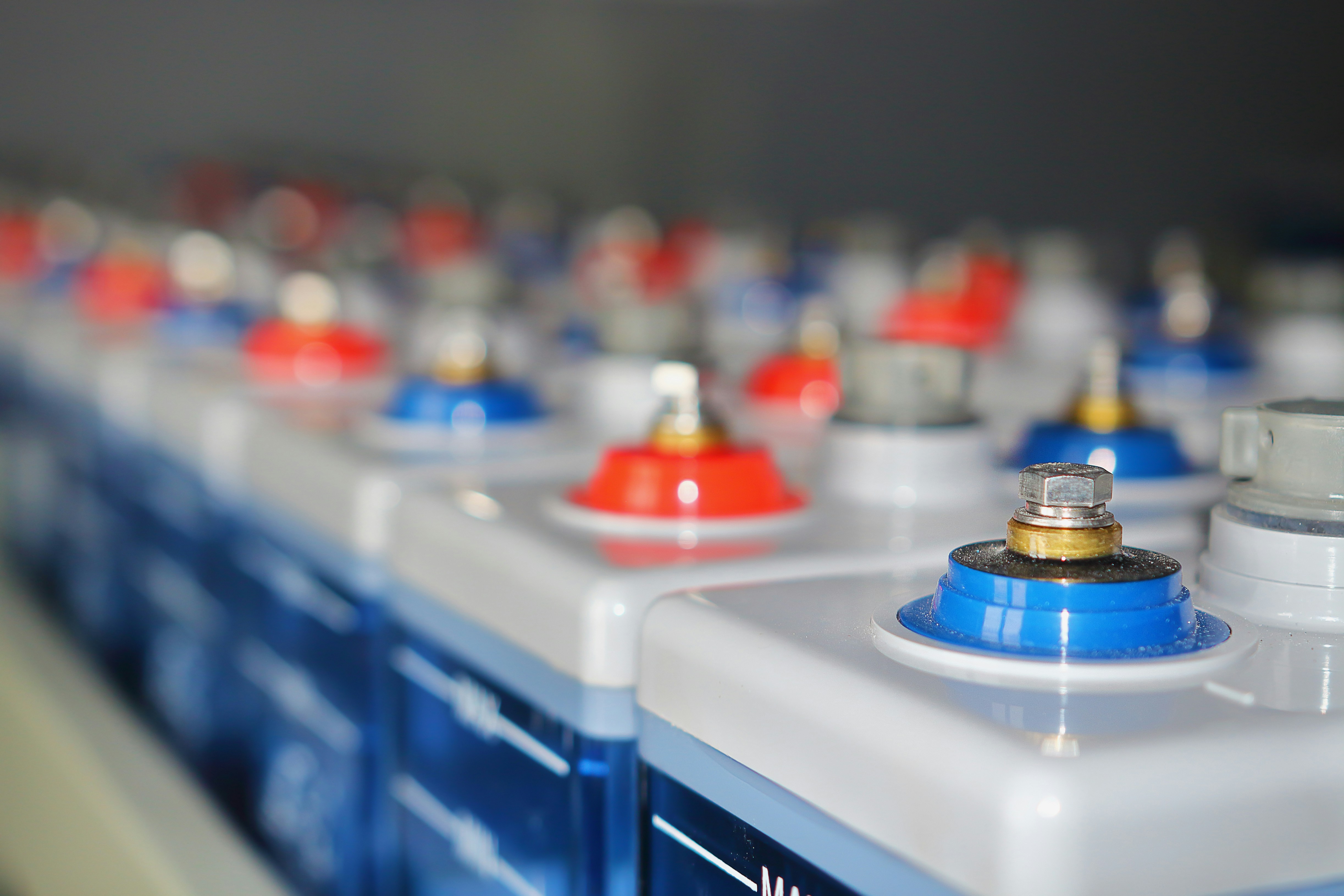
8 Battery materials R&D challenges and how to solve them
Battery materials R&D is uniquely data-intensive: fragmented teams, scale-up failures, long test cycles, and a huge design space all slow it down. Here are the eight biggest challenges and how structured, connected data helps solve each one.
.png)
Managing extreme complexity: why aerospace and defense manufacturers need PLM
Aerospace PLM helps aviation and defense manufacturers manage complex products, long lifecycles, strict compliance requirements, and global supply chains. Explore how PLM supports digital engineering, configuration control, and innovation.

ELN to PLM: why R&D and product lifecycle belong in one system
R&D captures the data that defines a product, but that knowledge often stops at the lab. Here is why connecting your ELN, LIMS, and PLM in one data model protects traceability, speeds launches, and turns formulation work into a lasting record.
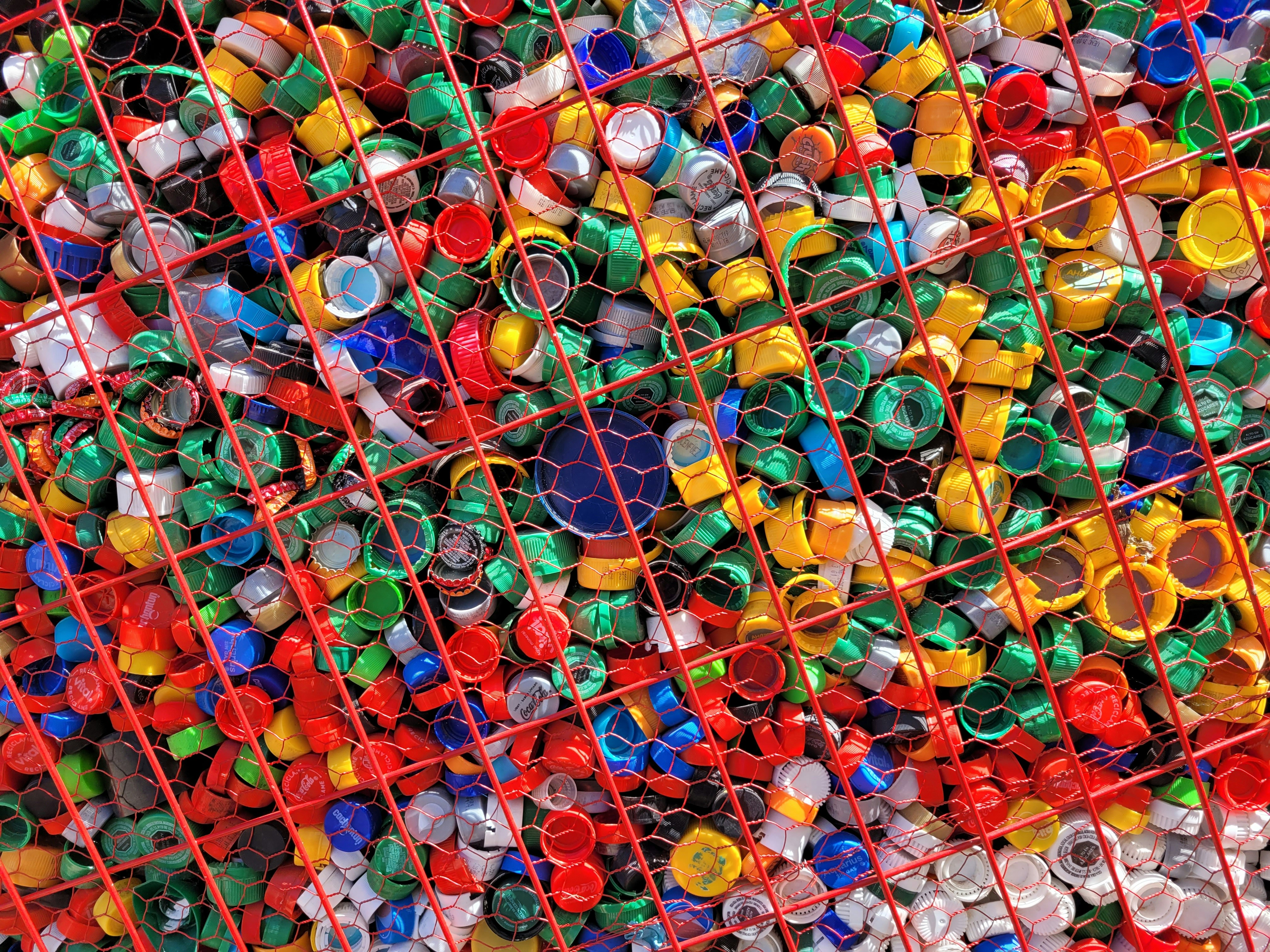
Reformulating for recyclability
Recyclable reformulation must hit sustainability targets without losing barrier, seal, or clarity. Teams win by querying their experimental history, not rebuilding it: structured, connected R&D data cuts testing, survives scale-up, and proves it.
