A limit changes. You know which formulas fail the same day
Uncountable maintains its own regulations database from official sources, checked inline on every recipe. When a source updates a limit, every recipe already checked against it reflects the new rule: so the question "what does this change cost us" has an answer before the meeting, not after a screening project.
Used by the world's leading companies






What is regulatory management for formulation teams?
Regulatory management software helps product-development teams understand whether a formulation meets the requirements of the markets where it will be sold.
For formulation teams, that means more than storing regulations in a separate database. These need to be checked against the actual recipe as it is developed:
Uncountable brings regulatory screening into the formulation workflow. Teams can see pass or fail by market while ingredients and levels are being evaluated, with the source, jurisdiction, limit, and last-checked date retained alongside the recipe.
Check as you formulate, not after
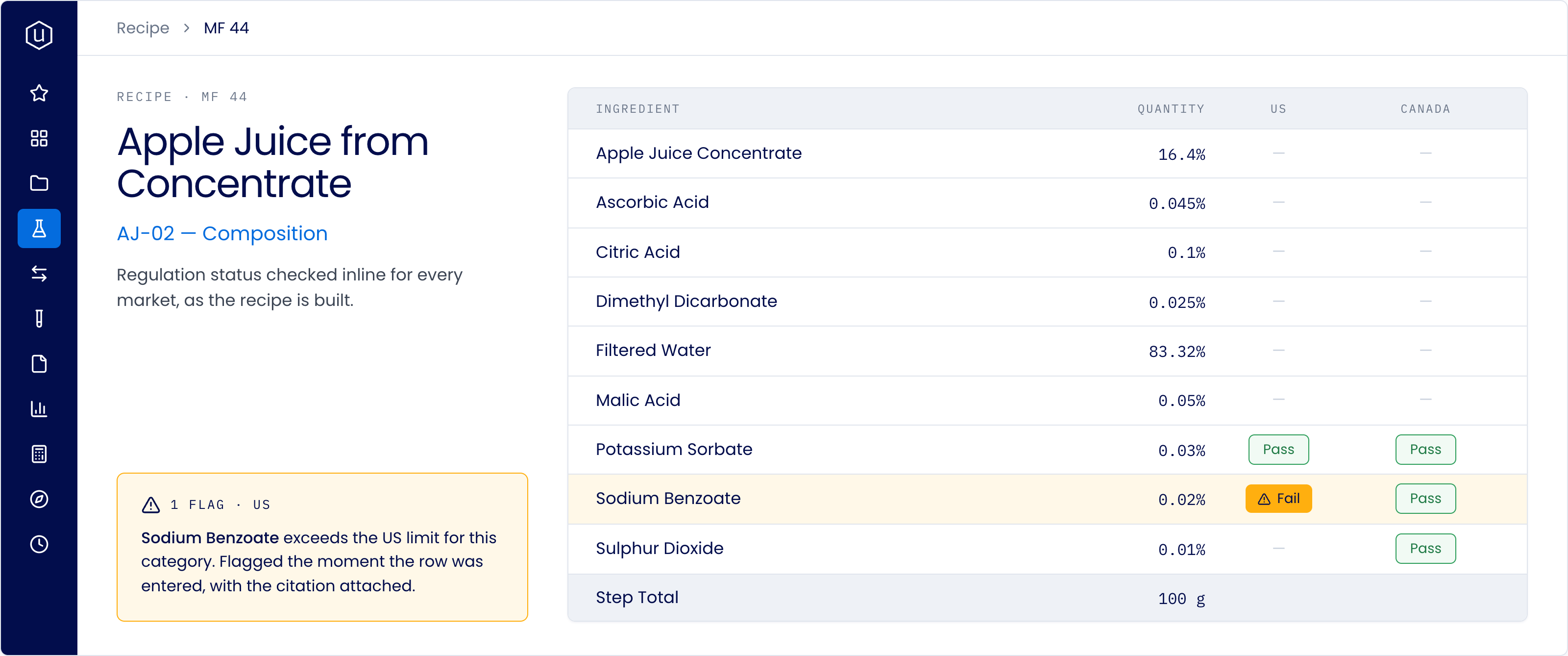
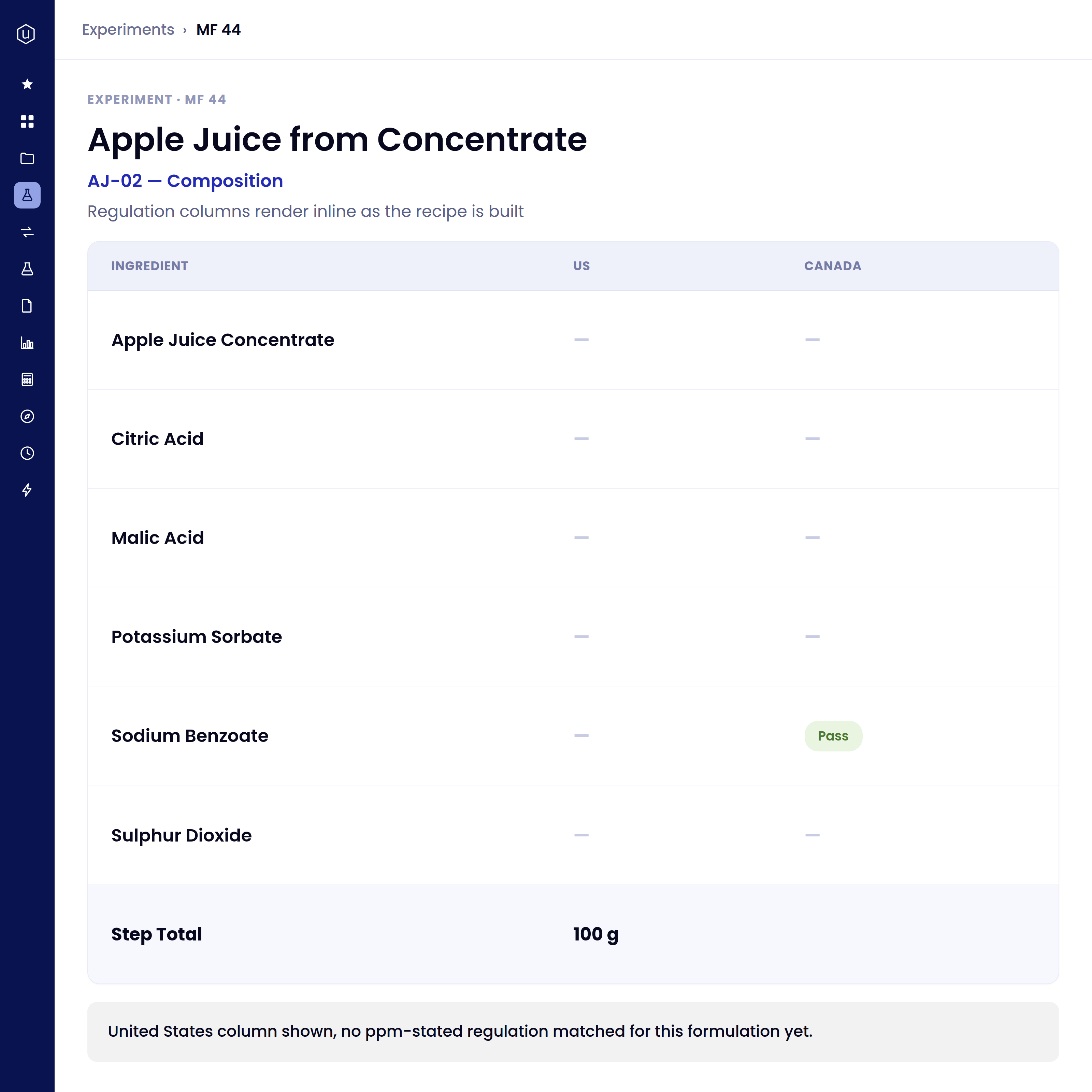
Uncountable checks regulatory status right on the recipe page, in the same system the formulator is already working in. As ingredients and levels go in, the pass or fail for every market updates immediately, so a direction can be adjusted while it's still cheap to change, not after weeks of work are already behind it.
Compliance checked in the recipe
Fully customizable, when your team's interpretation of a regulation differs from Uncountable's default reading, an admin can override it for that jurisdiction and ingredient, with a required justification attached. The override is gated to admin permissions and stays on the record, so the platform reflects your house rules without losing track of what was changed or why.
Status sits on the recipe being built, not in a separate tool alongside it.
Formulators see the status for every market on the recipes page as they build, a green Pass or red Fail computed live against the regulation's limit.
One column per market, so a fail in one market is visible immediately, not discovered later in a separate review.
Check the recipe as formulated or the finished product, whichever your team uses, via per-family basis calculations.
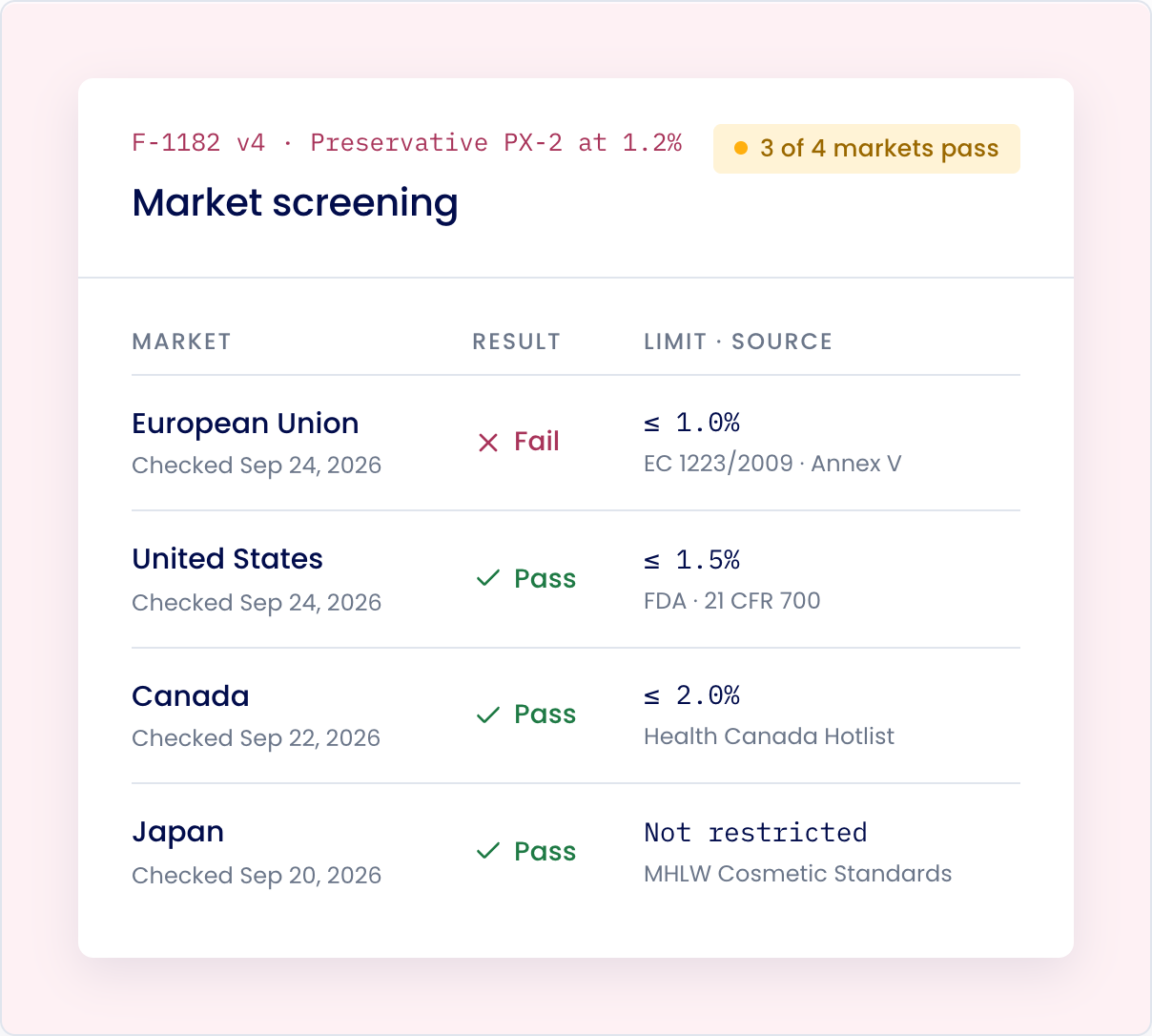
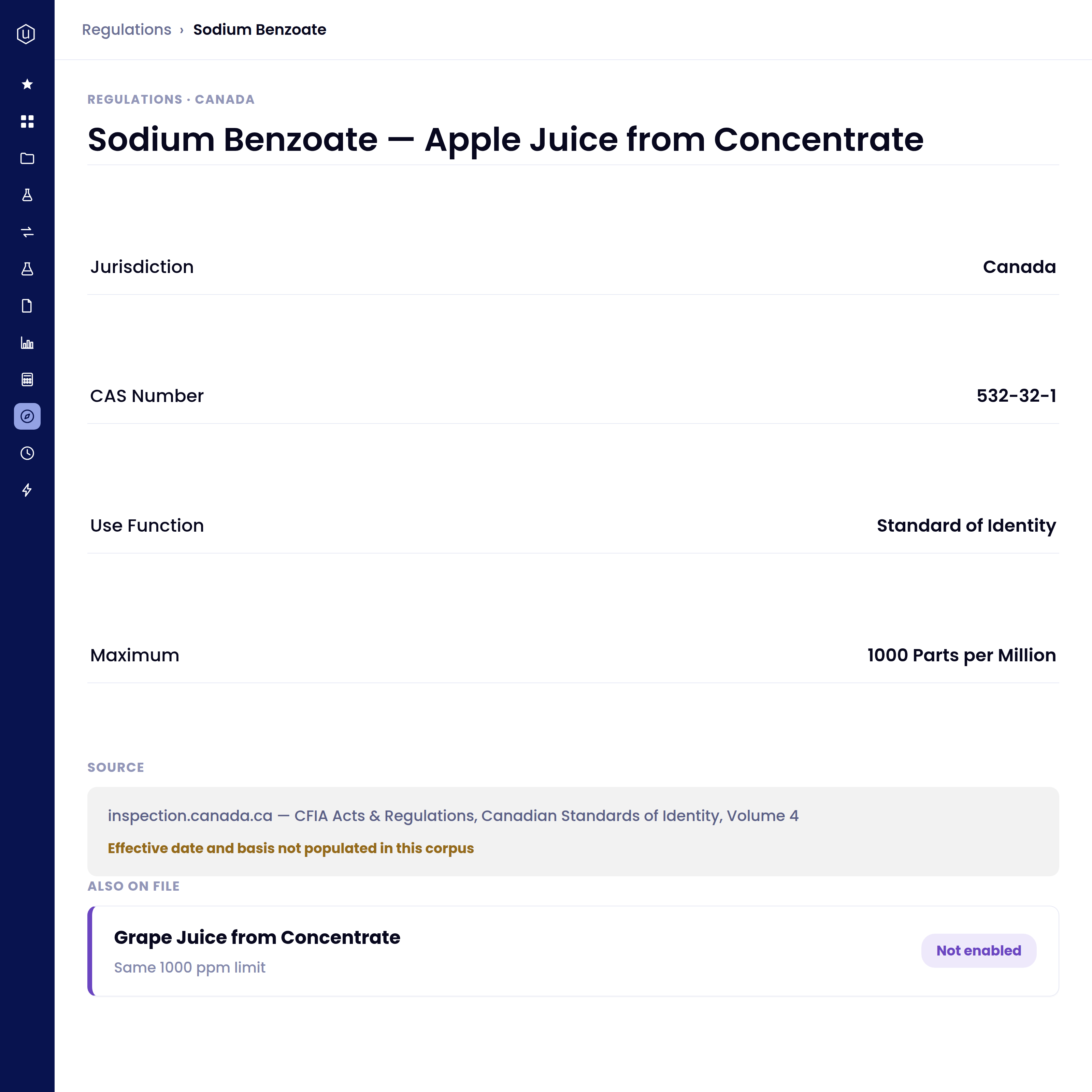
Uncountable maintains its own regulations database from official sources, and every row carries its citation.
Every row carries jurisdiction, product category, the permitted level with units, a pinned source URL, and the date it was last checked.
Regulations are ingested and refreshed from official sources across covered jurisdictions, so your team never updates limits manually.
When an official source updates a limit, every recipe already checked against it reflects the change, without someone tracking it down.
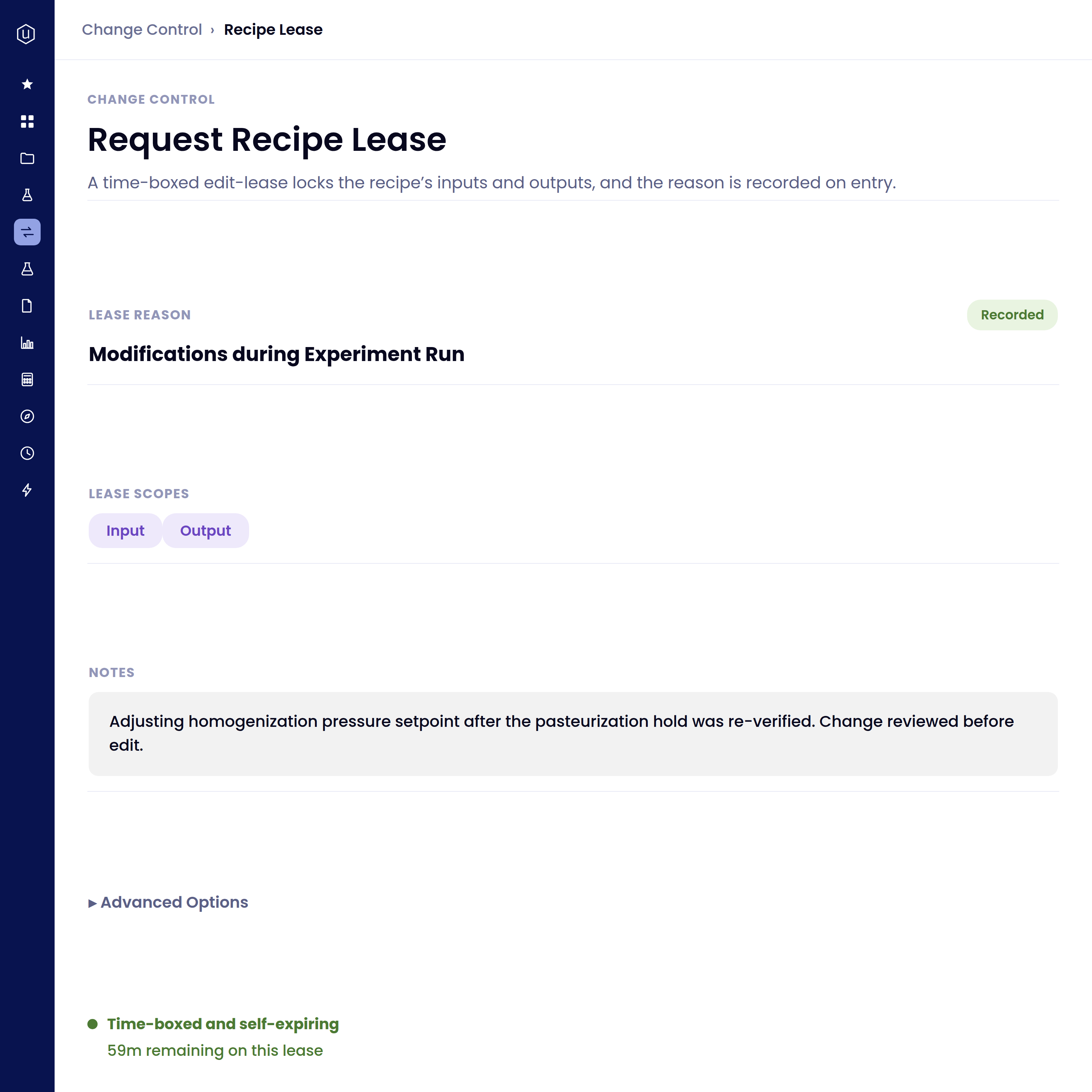
Recipe edits can be locked down independently of the regulatory check itself.
A workspace-level change-control setting can require an edit-lease on a recipe's inputs and outputs before changes are made.
The edit-lease is a records-integrity control, configurable per workspace. It doesn't key off the regulatory status; it governs who can change a recipe and when.
A lease expires on its own; there's no manual step to release it, and no lock left open after someone forgets.
Six moments this changes
A regulation changes. When an official source updates a limit, every recipe checked against it reflects the new rule, without someone tracking it by hand.
Auditing the active portfolio. Checking every active recipe against its markets at once, rather than recipe by recipe on request.
A customer or auditor asks for the basis. The governing regulation, the source and the last-checked date are already attached to the recipe, not reconstructed after the request.
Entering a market you haven't checked before. Select the market and every existing recipe checks against it, rather than starting a manual screening project from zero.
Swapping an ingredient. A substitution that changes the compliance picture shows up on the recipe immediately, not after the reformulation is finished.
A formula update changes the outcome. A recipe that passed can fail after a reformulation, and the change is visible on the recipe itself.
What changes for regulatory, R&D, and product teams
Regulatory management becomes more useful when it is connected to the product record rather than treated as a final review step.
Formulators
Regulatory teams
R&D leaders
Quality and product teams
Portfolio teams

The regulation is visible as you formulate, not after.
Your own regulations database, kept current from official sources, checked inline on every recipe.
FAQs
Not directly today. The Pass/Fail status is computed live and shown inline, but it doesn't itself gate a lock or publish action. A separate, workspace-level change-control setting can require an edit-lease on a recipe's inputs and outputs; that's a records-integrity control, not a regulatory pass/fail gate. Confirm current behavior with your account team if a hard release gate matters to your evaluation.
Coverage is bounded by what's been ingested into the regulations database, currently strongest in food, with jurisdiction coverage expanding. "Every market you sell into" depends on your product category and markets; confirm current coverage with your account team.
Yes, separately from the pass/fail status. A workspace-level change-control setting can require an edit-lease on a recipe's inputs and outputs, so edits are controlled and attributable. It's a records-integrity control, not a regulatory gate.
Regulatory screening software checks a product, recipe, ingredient, or formulation against applicable regulatory requirements. For formulation teams, it helps identify whether ingredient levels, product categories, and target markets create a pass or fail outcome before the formulation is finalized.
Regulatory management helps formulation teams see the compliance impact of ingredients and levels while they are developing a recipe. Instead of completing a formula and sending it for a separate review, teams can check relevant markets inline, adjust direction earlier, and retain the regulatory basis with the recipe.
Companies can manage regulatory changes more effectively when regulatory sources, limits, jurisdictions, and product records are connected. When an applicable rule changes, teams can identify the recipes already checked against that rule and assess the potential impact across the portfolio.
Yes. When an ingredient or level changes in a recipe, formulation teams can evaluate how that substitution affects regulatory status across the relevant markets. This helps teams identify issues while reformulation is still in progress rather than after the work is complete.
Find out what a limit change would cost you.