One home for every technical and service request
Every R&D organization runs on requests: a plant needs a formulation tested, one analytical team needs another to run a method on a sample. Uncountable turns that work into structured, trackable units, not email threads.
Deployed by 175+ enterprise product development teams







Deployed by Enterprise R&D and Innovation Teams


Requests that stall out with no discrete owner
Most of this work today is coordinated over email, a spreadsheet, or SharePoint. A plant needs a formulation tested, the commercial team needs a sample matched, quality needs a strain characterized, and each one lives somewhere different. Things stall out waiting on an approval because there is no discrete owner and no discrete assignee.
One request, start to finish:
From ad hoc ask to a tracked unit of work
A request starts as a structured intake, not an email chain, and moves immediately to the right owner.
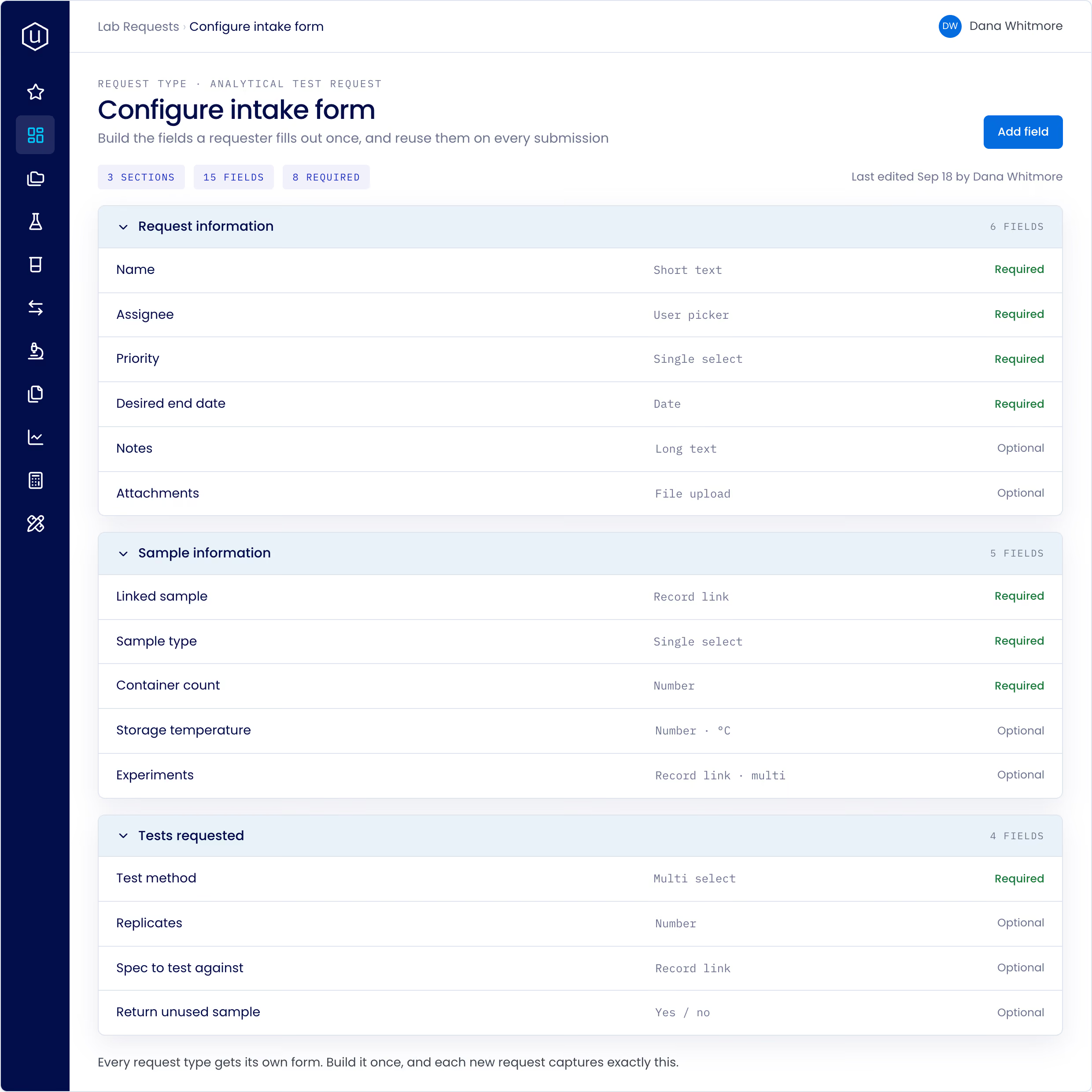
1. Submit through a configurable intake form
Each request type gets its own form, capturing exactly what the fulfilling team needs up front.
2. Route to a discrete owner
Scientist to scientist, quality to scientist, or regulatory to scientist, whatever the workflow calls for.
From the moment it's submitted, the request has an owner, a due date, and a place it lives; not a forwarded email and someone's memory of who agreed to do it.
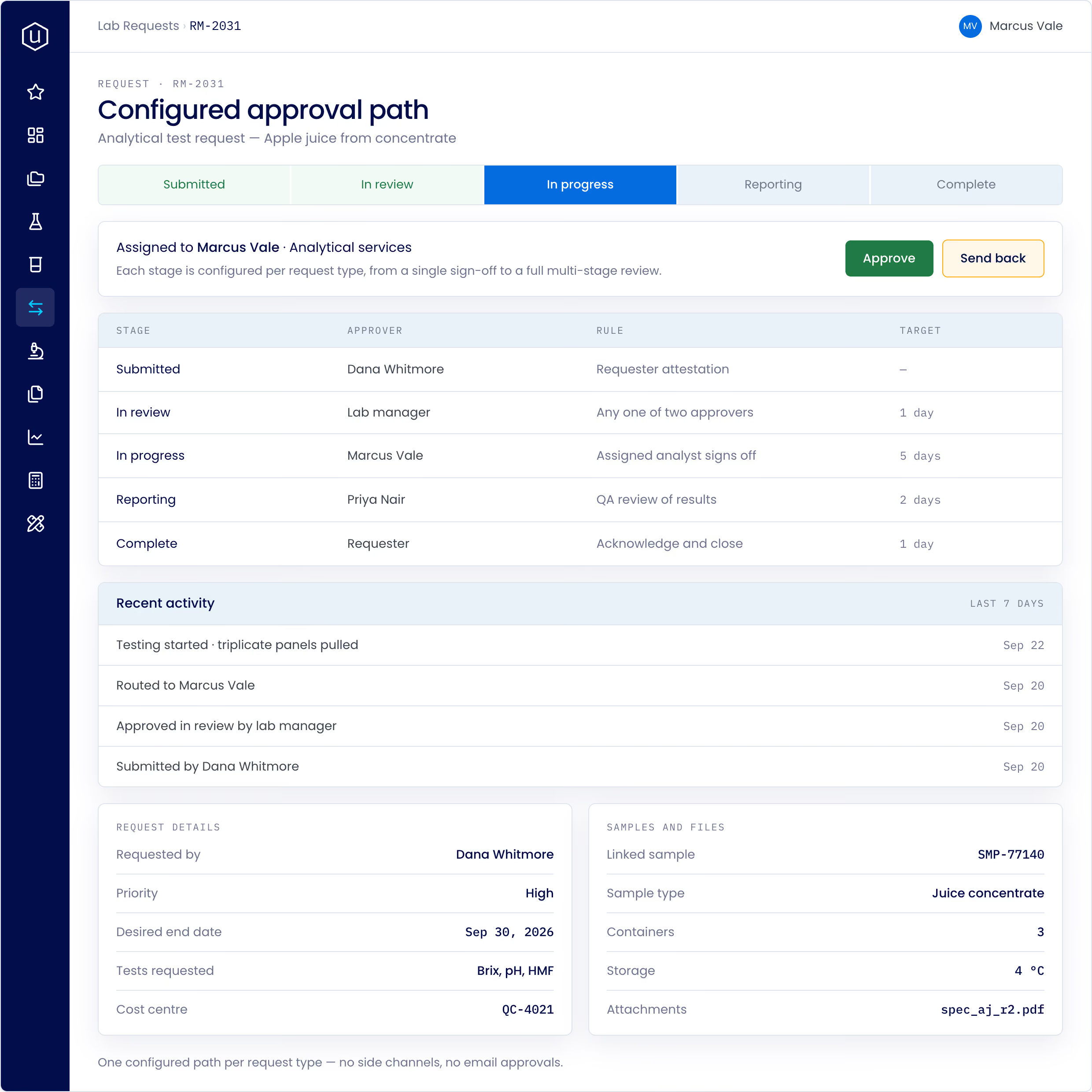
A request moves through approval built for its type, with status visible to everyone involved.
3. Configurable approval paths
Requests move through approval paths built for the request type, not one fixed chain for everything.
4. Stage gates where they're needed
Some requests just need a single approval; others benefit from a full stage gate for more oversight, set per request type.
5. In-platform notifications
Status lives with the request, so nothing depends on someone happening to check an inbox.
6. One shared status, not two
The requester and the fulfilling team see the same status, instead of two different pictures of where things stand.
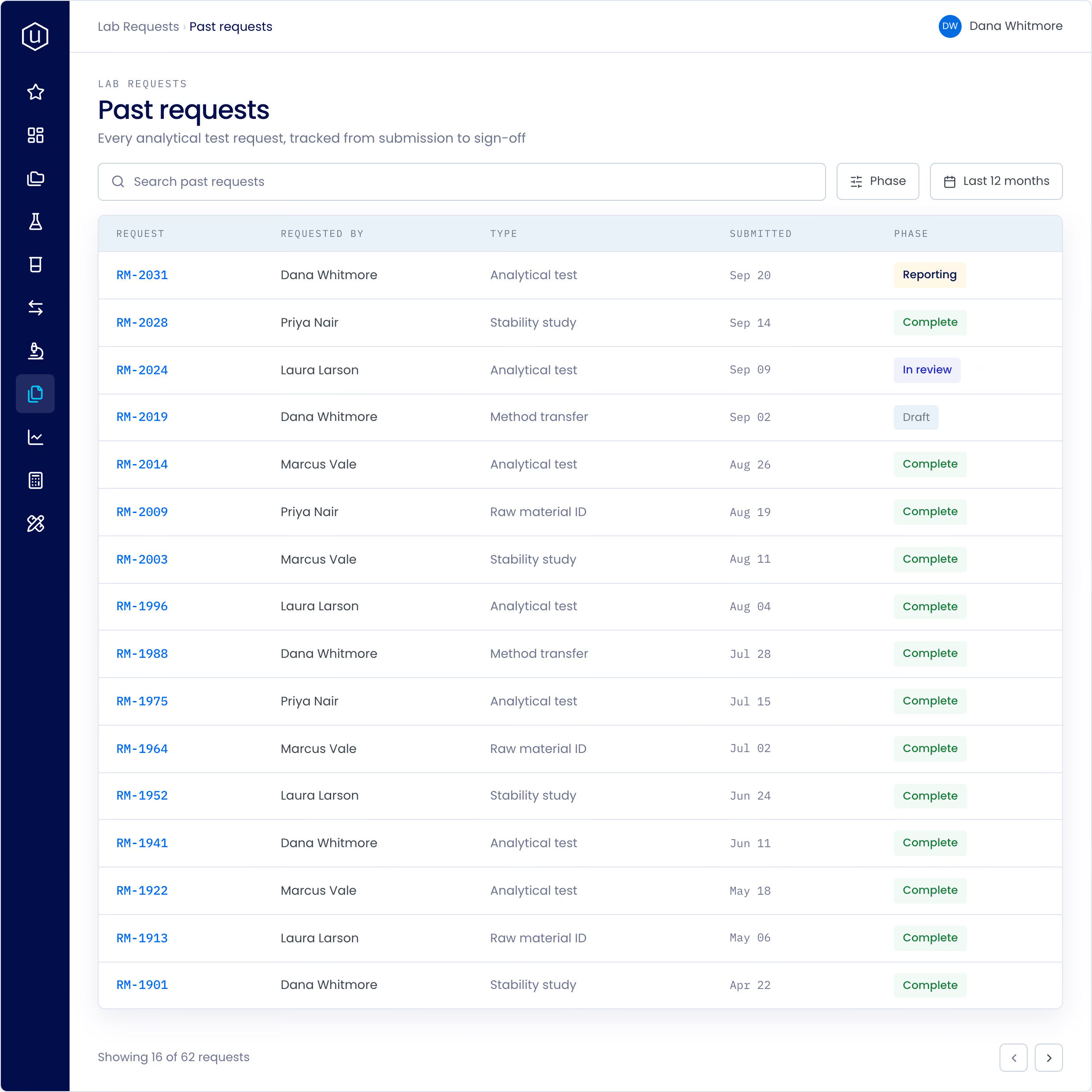
The result lives with the request itself, connected to the record it came from and searchable later.
7. Close it out on the record
The result lives with the request, not buried in a separate thread someone has to go dig up.
8. Connected to the underlying record
A request tied to a formulation or a sample stays connected to it, not a standalone ticket floating on its own.
9. Searchable later
Past requests and their outcomes are searchable, so similar work doesn't start from zero.
10. Trackable, not lost in a thread
Nothing depends on remembering who said what in an email chain from three weeks ago.
The requests that slow you down
Build a configurable intake form for it once, capturing exactly what the fulfilling team needs, and every request of that type routes the same way from then on.
A request routes straight to the right person, scientist to scientist, quality to scientist, regulatory to scientist, so it's never sitting in an inbox waiting for someone to claim it.
Some requests need only a single approval; others carry a full stage gate for more oversight. Both run on the same platform, set per request type, not forced into one fixed chain.
Status lives with the request itself and updates through in-platform notifications, so the requester and the fulfilling team are looking at the same picture, not two different ones.
Close the loop on the record itself, connected to the formulation or sample it came from, instead of a result buried in a separate email thread.
Past requests and their outcomes are searchable, so a similar ask doesn't start from zero or wait on someone's memory of how it went last time.


Every request becomes a tracked unit of work.
Configurable intake forms, a discrete owner, and in-platform notifications, so nothing stalls waiting on someone to notice.
FAQs
Internal technical and service requests that move between teams, like a plant asking R&D to test a formulation, or one analytical team asking another to run a method on a sample. Product change requests and supplier registration are handled separately, on the Product Lifecycle side.
Yes. Each request type gets its own configurable intake form, so it captures exactly what the fulfilling team needs up front instead of a back-and-forth email thread.
A request routes to a discrete owner or team, scientist to scientist, quality to scientist, regulatory to scientist, whatever the workflow calls for, and moves through configurable approval paths with in-platform notifications, so nothing depends on someone happening to check an inbox.
No. Some requests just need routing and a single approval; others benefit from a full stage gate for more oversight. This is set per request type, not fixed by the platform.
See ad hoc turned into tracked.