Trace every part back to the batch, lot and process that made it.
Formulations, processing conditions and test results on one record, from raw material lot to finished part, so a failed test points to its cause.
Deployed by 200+ enterprise product development teams







Deployed by Enterprise R&D and Innovation Teams



In advanced materials, a part can fail months after the batch that caused it
Raw material lots, mixing and cure conditions and test results sit in different labs, notebooks and instrument files. Uncountable keeps them on one record with the formulation, so a failed test can be traced to what changed.
Illustrative example with demo data.
Lab, pilot and production data on one record
Rogers Corporation makes engineered materials for EV, electronics and aerospace markets. With lab, pilot and production data connected in Uncountable, its engineers optimize new materials at lab and pilot scale before committing to a production run.
What changes when your materials data is connected
The workflow behind every material
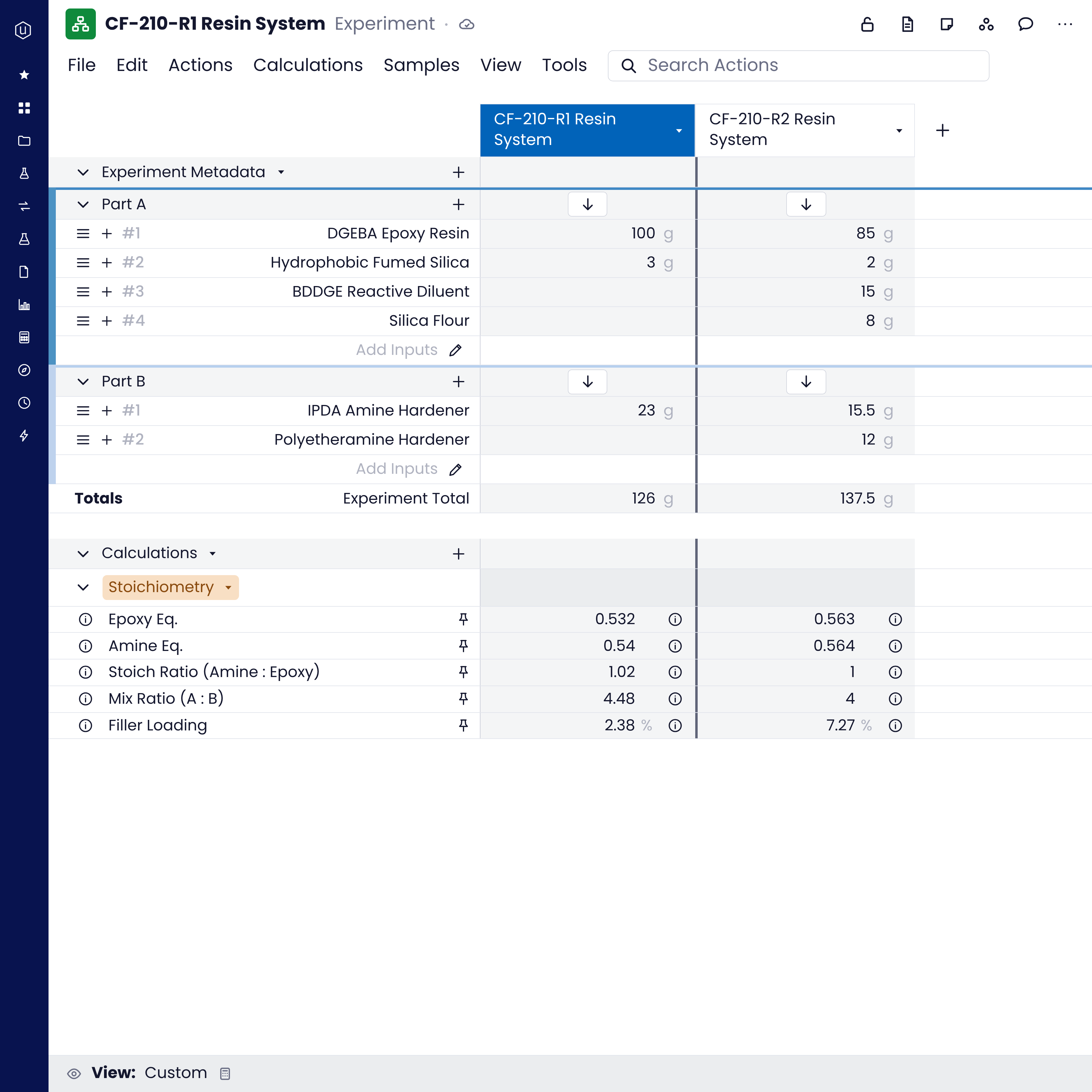
Build formulations with the ratios and units your chemistry needs, and see calculated values before anything is mixed.
Calculations built in: Stoichiometric ratios, filler loadings and mix proportions are calculated from the ingredients, so every formulation uses the same math.
Any unit you work in: Formulate in parts per hundred, weight percent or mix ratio, and switch between them without a spreadsheet.
Every version on record: Each version keeps its ingredients, process steps and results, so the team can see which change did what.
Change the formulation, not the spreadsheet that tracks it.
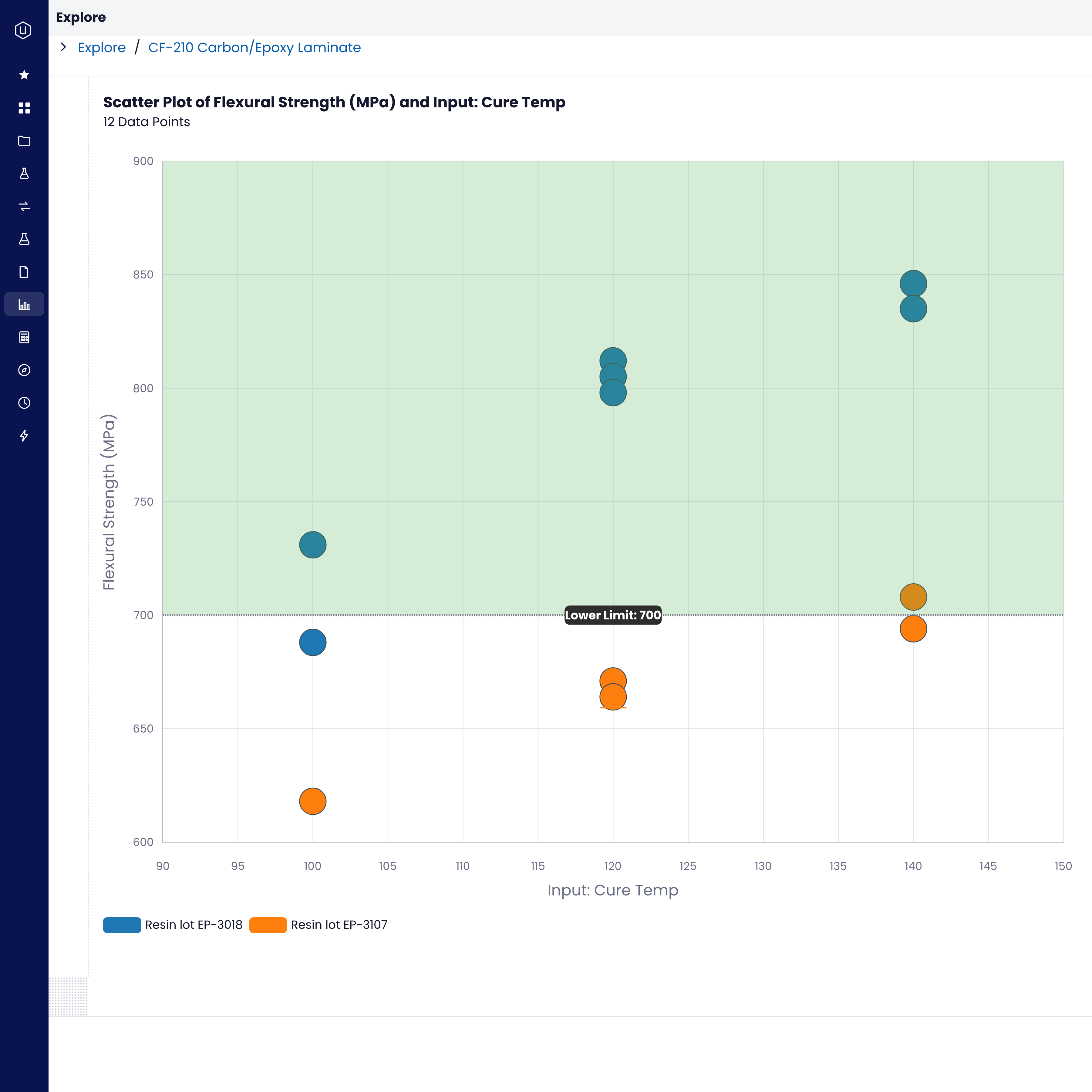
Follow each material from raw lot through mixing, layup, cure or firing to the finished part, with the conditions of every step attached.
Multi-step processes: Record each step as it happens, from powder blending to sintering or from layup to cure, with its own settings and outputs.
Barcoded intermediates: Batches, panels and specimens get their own IDs, so a test result can always be traced back to the materials and step that made it.
Lot traceability: Find every part made from a raw material lot when a supplier flags a problem.
Know what went into a part before you have to ask.
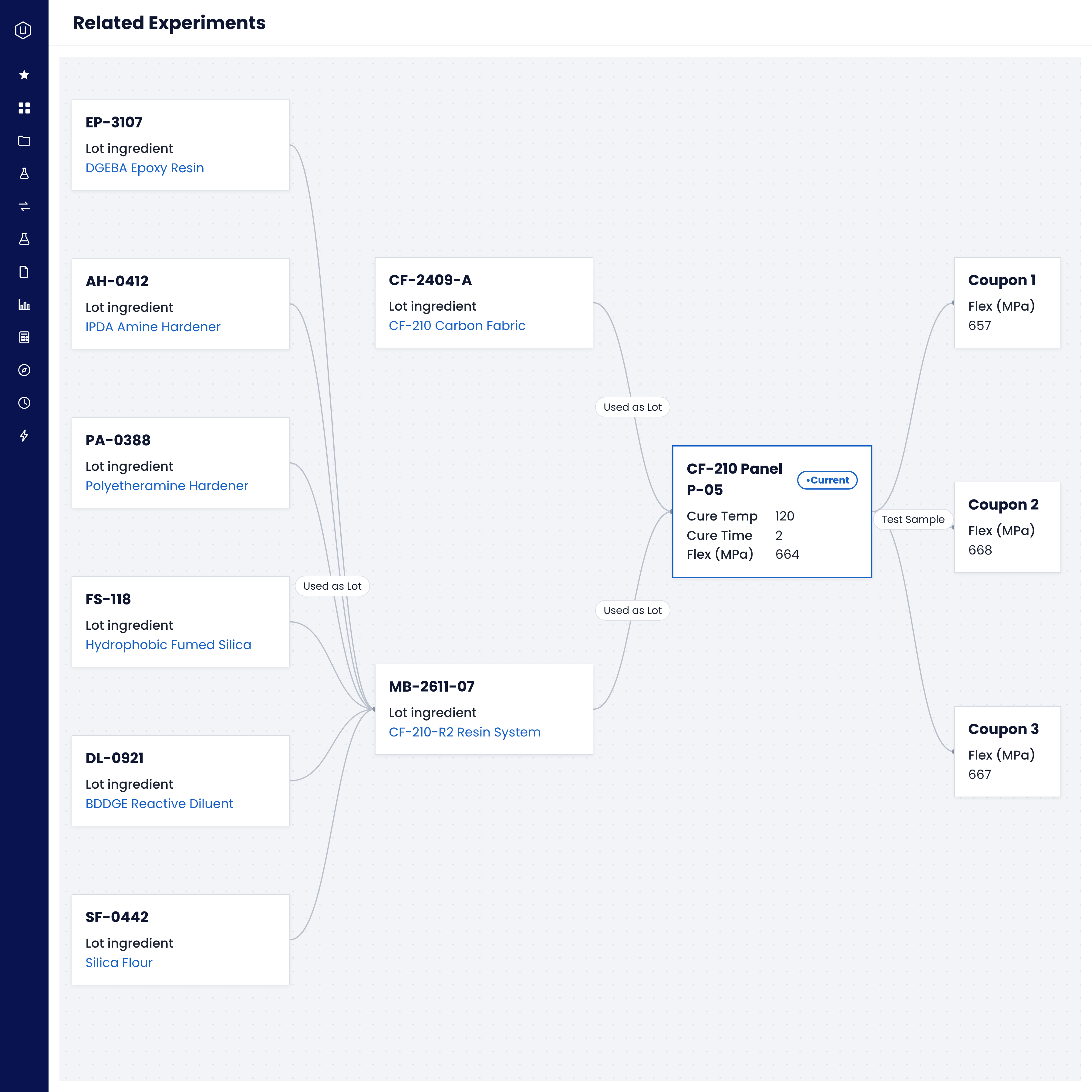
Ask your materials data a question in plain language and get an answer that links back to the records it came from.
Plain-language questions: Ask which builds met a strength target, or what changed between a passing and a failing batch.
Answers you can check: Bodie, Uncountable's AI agent, links each answer to the formulations and results it used, so your team can verify it before acting on it.
Next experiments suggested: Bodie uses models trained on your past builds to suggest formulations and process settings to try next, within the ranges you set.
Find the answer without knowing where it's stored.
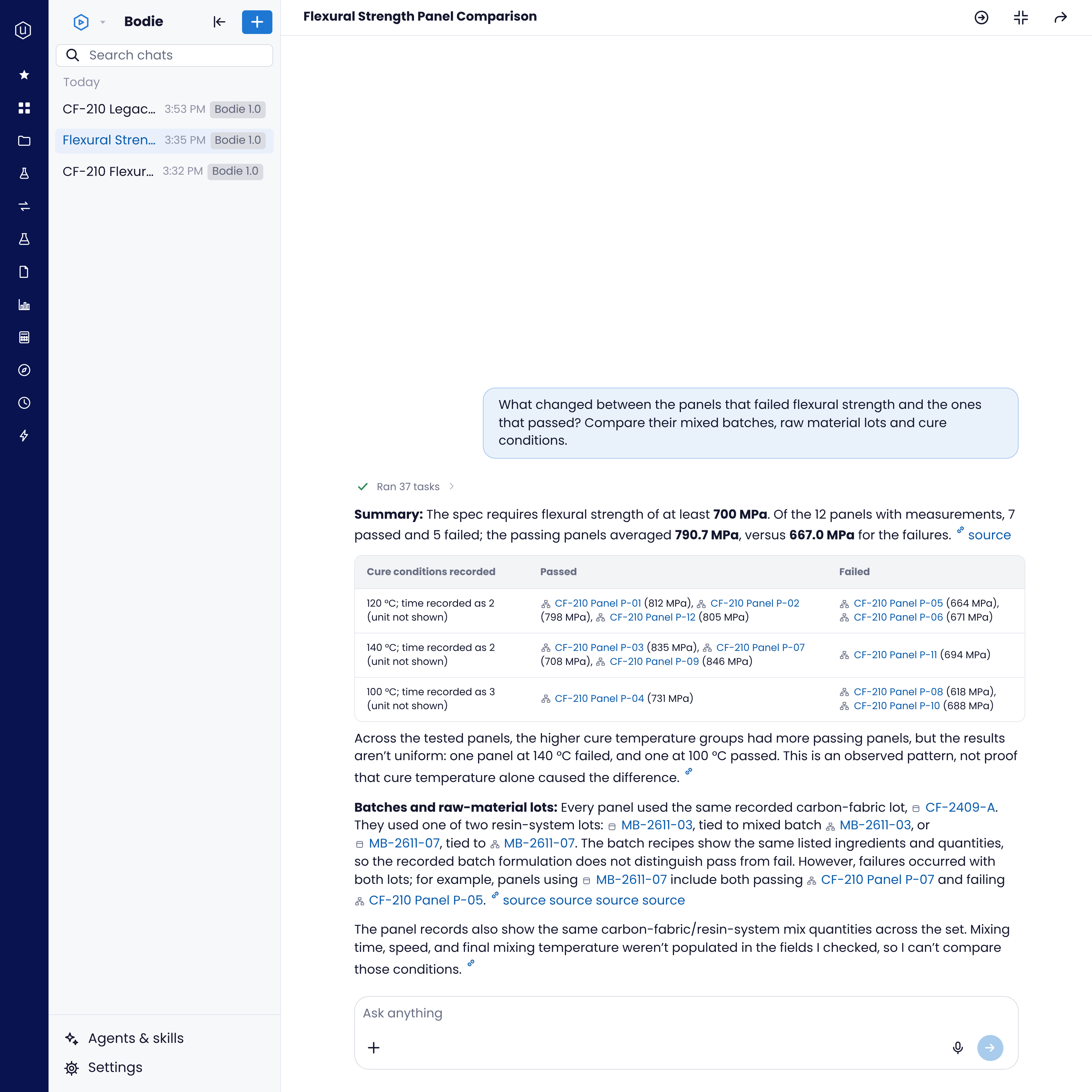
Bring mechanical, thermal and durability results onto the record with the build they came from, and compare them across formulations and process settings.
Instrument data in: Results from test frames, rheometers, thermal analyzers and other instruments are imported, not retyped from a report.
Spec checks as results arrive: Each build is checked against its target properties, so a miss is caught before the next round of trials.
Trends across builds: Plot how filler loading, cure temperature or particle size affects the properties you care about.
See which process change moved the result.
See exactly where your rollout stands: what's done, what's next and who's leading each step.
A phased plan with clear owners: Kickoff, configuration, data migration, testing, go-live and hypercare, each led by Uncountable, your team or both.
Configured to your lab: Test methods, specs, units and calculations set up the way your team already runs them.
Your history comes with you: Historical formulations, process records and test results are migrated, so past work is searchable from day one.
Configured to your lab, not the other way round.
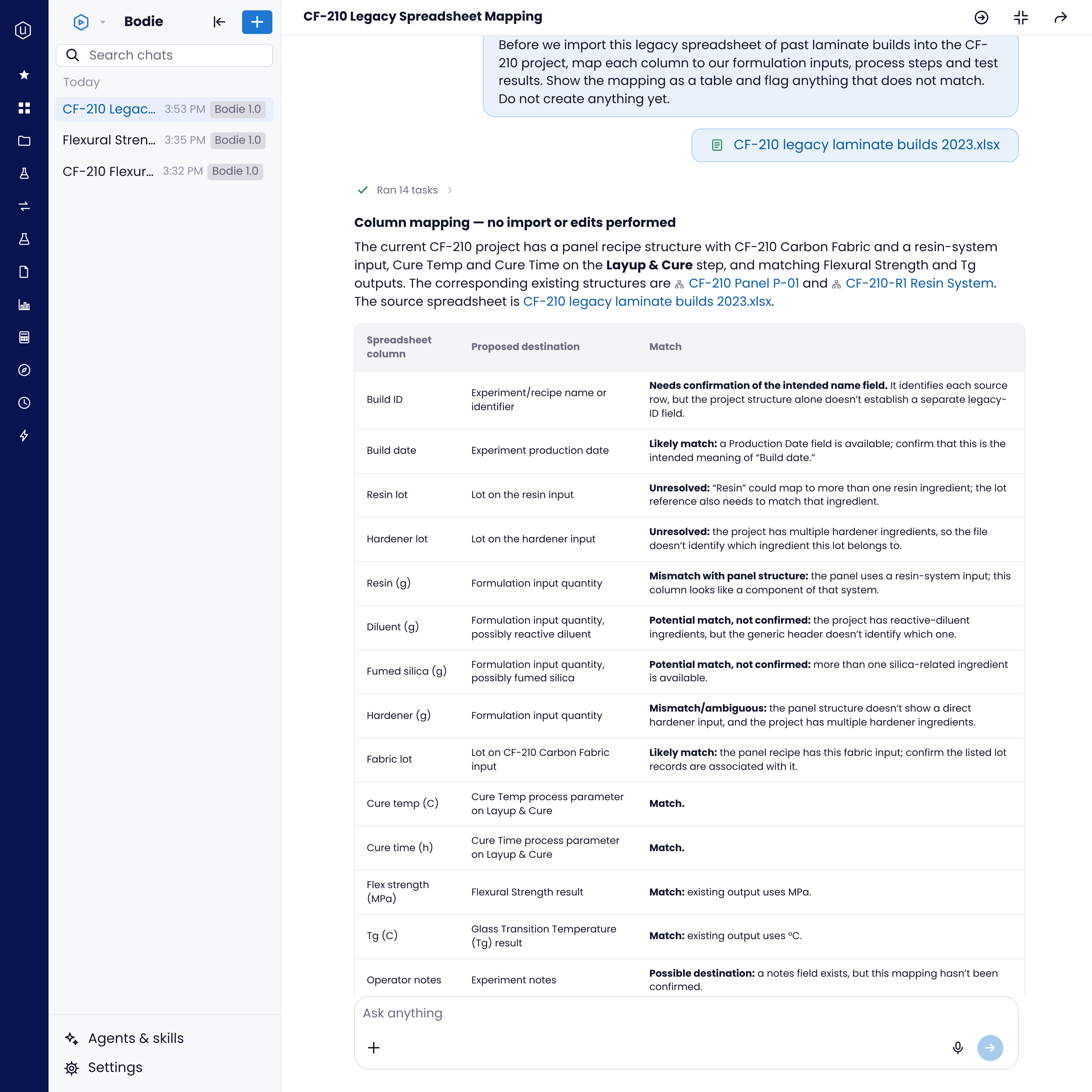
Keep the formulation, the process and the test result on one record.
Raw material lots, process conditions and test results stay on the record with the formulation, so teams can compare builds in the lab, on the pilot line or at scale.
Built around your materials
Every material has its own inputs, process and tests. Uncountable is configured to yours, so each one is recorded the way your lab already works.
Search formulations by ingredient and lot, and check them against restricted-substance lists as you develop them.
See a material developed from target to scale-up
Follow a bio-based sealant from its performance targets through formulation, testing and the gate into scale-up.
Self-guided product tour with example data.
Your formulations stay yours
Formulations, process settings and test data are the know-how your materials are built on. Your data stays isolated per customer, with access you control.
Full documentation, including the SOC 2 report and penetration-test summary, is available on request.
FAQs
Many teams start with spreadsheets, an electronic lab notebook and files from each instrument. Uncountable brings formulations, processing conditions and test results into one platform, so every new material starts from the work your team has already done.
Record each step with its inputs and conditions. In Uncountable, raw material lots, intermediates and process settings are linked to every part and test specimen, so you can compare a failing build with a passing one and see what changed.
Yes. Stoichiometric and mix-ratio calculations are built into formulations, and multi-step workflows record each step, from blending and forming to cure or firing, with its own settings and outputs.
Yes. Results from instruments and their export files are imported onto the build they belong to, so mechanical, thermal and analytical data doesn't have to be retyped from a report.
Uncountable migrates historical formulations, process records and test results during implementation, mapped to your materials, test methods and units, so past work is searchable from day one.

Bring us the failure you can't trace
Book a 30-minute intro call and see how your formulations, process steps and test results would connect on one record.
Book an intro call