
.png)
Every time data has to be copied by hand from one system to another, a lab is exposed to a media break: a gap where a result is retyped, an export is reformatted, or a value is transcribed into a spreadsheet. Each break is small on its own. Across a year of experiments, they add up to lost data, delayed decisions, and a record no one fully trusts.
Cloud R&D data management is how modern teams close those gaps. When the electronic lab notebook, laboratory data, and instruments run on one connected model, data moves through the workflow without a manual handoff. This guide explains where media breaks arise in 2026 and how to design them out.
What Is a Media Break in Cloud R&D?
A media break is any point where data leaves one system and must be manually re-entered into another, such as reading a value off an instrument screen and typing it into a spreadsheet. Each break introduces the risk of transcription error, version drift, and lost context, because the data arrives stripped of the record it came from.
In cloud R&D workflows, media breaks are the hidden tax between tools that were never designed to connect. They are also the easiest source of data loss to eliminate.
Where Do Media Breaks Happen in R&D Workflows?
They happen at every handoff between disconnected tools. The most common are instrument to spreadsheet, where a rich dataset is flattened to a single typed value; research to quality, where a test request is emailed and rekeyed; and lab to product record, where a formulation is re-entered to move it forward. External partners and contract labs add more, since their results often arrive as PDFs that someone transcribes.
Each of these is a point where data can be lost, delayed, or altered without a trail, and where workflow continuity breaks.
How Do ELN, LIMS, and Instrument Integration Prevent Media Breaks?
They prevent media breaks by capturing data once and carrying it through the workflow without re-entry. An integrated electronic lab notebook and LIMS keep experiments, samples, and results on one model, so a test request moves from research to quality inside the system with its formulation context attached. Instrument integration feeds results directly into the record, preserving the full dataset rather than a single flattened number.
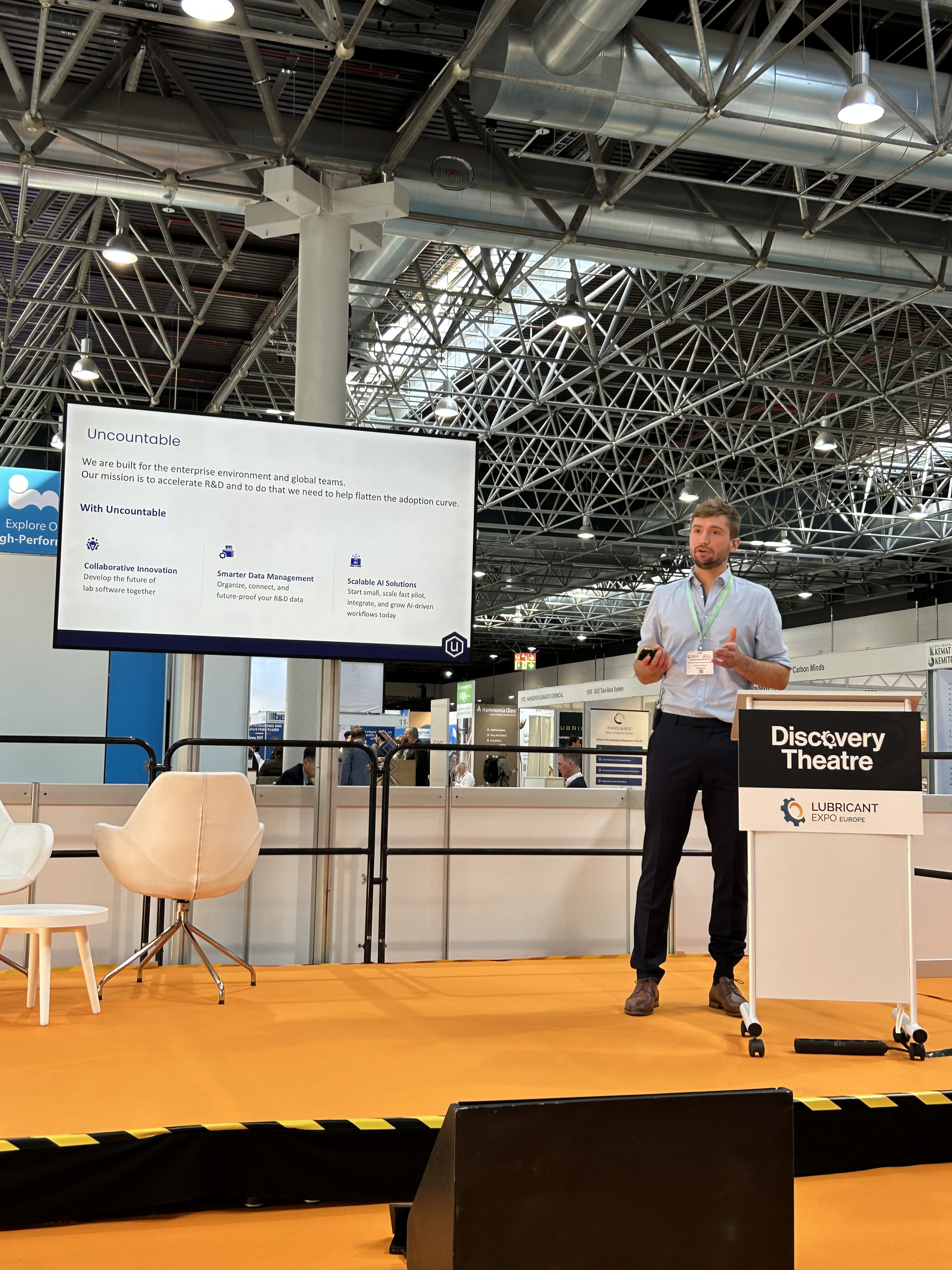
Uncountable connects to more than 400 lab instruments and supports bidirectional integration with enterprise systems, so results flow in and decisions flow back out without manual steps. Cabot Corporation, for example, connected more than 75 instruments and reported delivering results to its teams over 50 percent faster. Those figures are Cabot's own, from its published case study.
How Does Preventing Media Breaks Protect Workflow Continuity?
Preventing media breaks protects continuity because data no longer waits on a person to move it. When a result posts directly to the connected record, the next step, whether a control chart, an approval, or a downstream formulation update, can proceed immediately, and nothing stalls in an inbox.
Continuity also protects integrity. With no re-entry, there is no transcription error to chase and no ambiguity about which copy is current, which matters most in regulated and IP-sensitive work where the record has to hold up.
What Should Teams Prioritize in 2026?
Teams should prioritize the handoffs they repeat most, because those are where media breaks cost the most. Map each point where data is retyped or exported, then close the highest-volume one first with direct integration. Favor a platform that preserves full instrument data, connects research to quality natively, and integrates with the enterprise systems already in place. Structure the data first; continuity, analysis, and AI all depend on it.
A workflow with no media breaks is not just faster. It is a record you can trust, because every data point arrived intact and stayed connected to the context that explains it.
.png)
.png)
