
Most AI tools built for the enterprise follow the same pattern. You ask a question, you get an answer, and then you go back to whatever you were doing before. The insight is useful, but the workflow hasn't changed.
We built Bodie differently.
Bodie is Uncountable's AI assistant for scientists, available in the sidebar of every page in the platform. What makes it different isn't the model behind it or the interface around it; it's that Bodie doesn't just answer questions. It acts. From a single plain-language conversation, it edits your tables, builds designed experiments (DOEs), generates visualizations, and drafts notebooks — all inside your environment, grounded in your company's own data.
Why "Bodie"?
Bodie was our co-founder Jason's labradoodle and, effectively, the first Uncountable team member. He joined in 2016, sat in on early interviews, and attended every meeting he could nose his way into. He was a fixture of the company until he passed away in 2025. Naming the assistant after him keeps that legacy inside the platform, a permanent presence on the team.

The problem isn't access to AI. It's friction
R&D teams aren't short of data; if anything, they're drowning in it. The hard part is turning it into something usable. For teams working across spreadsheets, SharePoint, and disconnected tools, that means a chain of handoffs: search in one place, export to a spreadsheet, edit somewhere else, write it up in a fourth. Each step is manageable on its own, but together, they can add hours of manual shuffling.
Uncountable already removes most of that friction by putting the data in one place. Bodie removes the rest. Search, analysis, and action happen in a single conversation, and the results land where they're needed: embedded in your notebook, not stranded in a chat window you have to close before you can use the output.
What this looks like in practice
Accelerating daily work
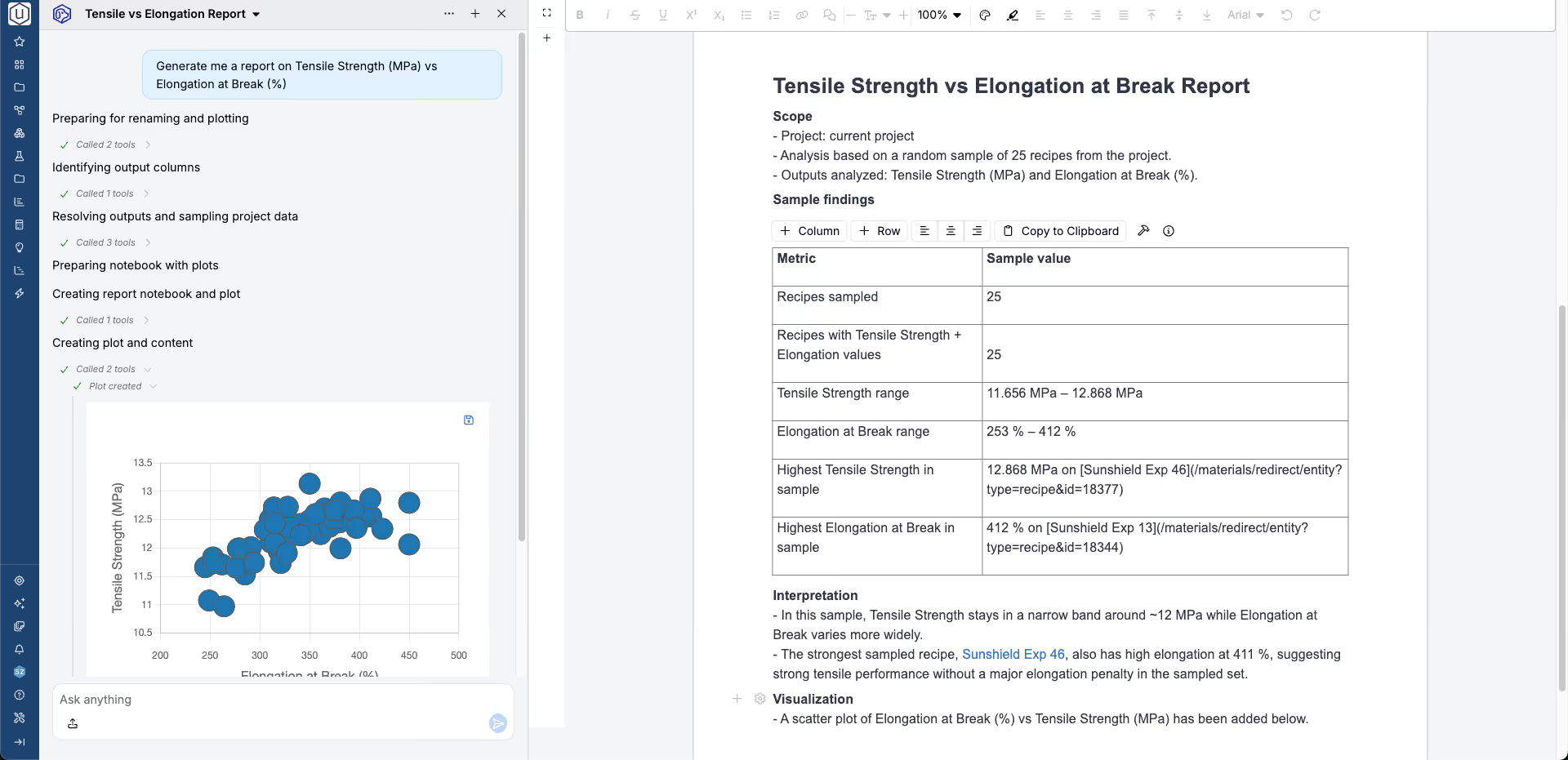
Start with the most common version of the problem: a scientist needs to find every experiment from the past year that used a specific resin, plot performance against cost, and share the results with the project team. With Bodie, that's one prompt. The chart is generated, embedded in a notebook, and ready to share in minutes.
A saving like that sounds incremental until you count how often it happens. Across a team of scientists, it adds up to days of recovered time.
ML-driven design, open to more of the team
Our formula recommendation engine is one of the most powerful capabilities in Uncountable. It's also one of the most underused - because setting up a well-designed experiment has traditionally required deep statistical knowledge or a data guru partner with time to help, and most scientists have neither on demand.
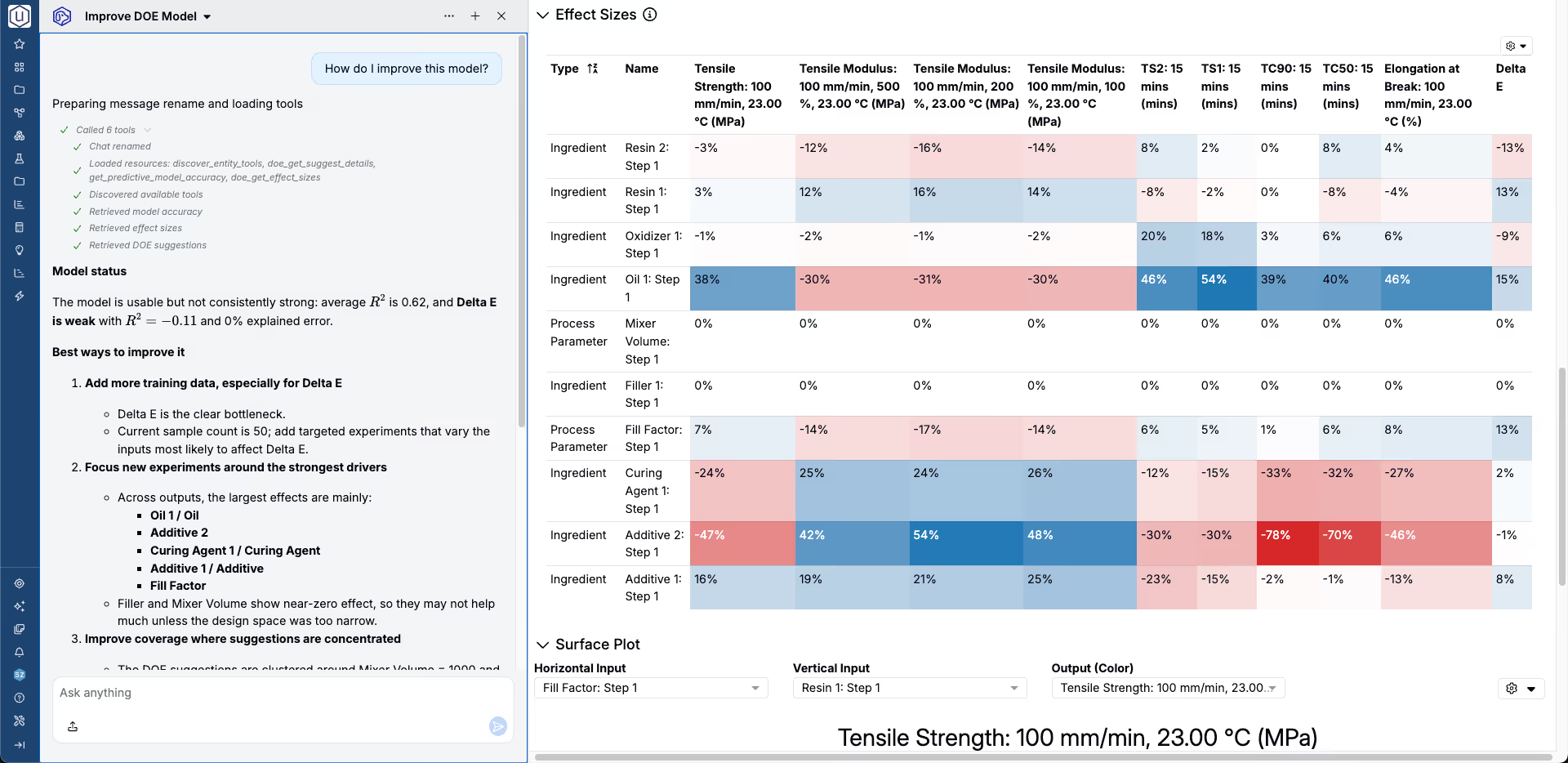
Bodie's ML Copilot changes that. A scientist describes the formulation guidelines, the performance targets, and the training set. Bodie pulls constraint bounds from the project's historical data, sets up the suggestion flow, and explains what the model is seeing as it goes. The scientist gets a usable setup in the same session; and understands the recommendations rather than taking them on faith. Work that used to mean queuing for a specialist now takes hours, not days.
Bodie makes Uncountable’s advanced modeling engine more approachable: scientists who know what they want to test but not how to structure the experiment can now get there themselves, with Bodie explaining the reasoning as it goes. The experts don't disappear from the process, they just stop being a bottleneck to it.
Visibility for managers and cross-functional teams
For R&D managers and project leads, Bodie solves a different problem: visibility. Where does the project stand? Which experiments are in progress? Which specs are affected by a formulation change? Today, those questions mean interrupting a colleague or relying on a report that's already a week out of date.
Bodie answers them directly, from the platform's live data, in plain language.
Quality and specifications in manufacturing
Quality teams face their own version of the friction problem. When a batch goes out of spec, root cause analysis means pulling CoAs (certificates of analysis), cross-referencing lot histories, and manually hunting for patterns across production runs; usually in spreadsheets, across disconnected systems, in the hours when a production line is on hold.
Bodie compresses that investigation. Ask it about a failing batch and it pulls the formulation history, raw material lots, and process context into one view. It can filter every batch that used the same supplier lot in the last 90 days and flag the pattern. From the same conversation, it creates the tables, logs the findings, and drafts the investigation notebook. The path from deviation to CAPA stays in one place.
For quality engineers working under ISO or GxP frameworks, where traceability and documentation aren't optional, that matters as much as the speed.
The handoff to manufacturing
When a product moves from development toward production, the context behind it usually doesn't travel with the spec. Ask Bodie to assemble the development history behind a formulation (the versions, the constraints, the test results from development trials) and it pulls everything into one place, ready for a tech-transfer package or a future reformulation. When a specification changes, it can surface which downstream records are affected. The development knowledge stays attached to the product instead of living in someone's memory.
Getting started
If you're already an Uncountable customer, look for the Bodie logo in the bottom left of your environment.
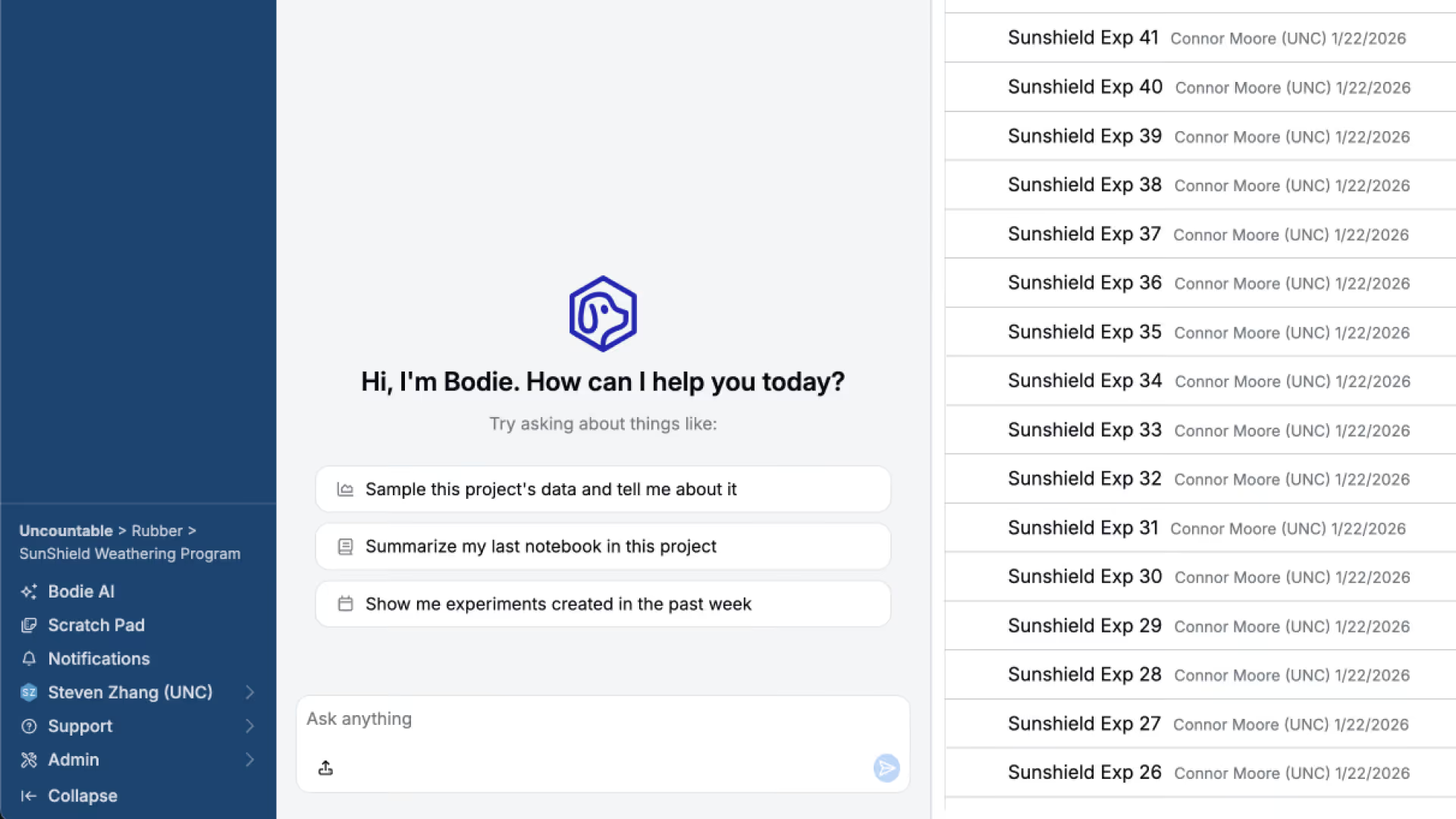
If the logo isn't there, the Gen AI module isn't active in your tenant yet - your Account Manager can tell you how to turn it on.
Ready to try it?
.svg)
FAQs
Bodie is Uncountable's in-platform AI assistant for scientists. It searches, analyzes, and acts on your R&D data - from finding experiments to building designed experiments to drafting notebooks.
Bodie is enabled in tenants with the Gen AI module active. It's free to use, though there are token limits in place while we learn more about usage patterns across teams. Check the bottom left of your environment for the Bodie logo, or ask your Account Manager if you're not sure whether it's active in your environment.
Yes. Bodie supports "bring your own model" (BYOM), and an MCP connector exposes Uncountable's data to external AI tools.
Yes, through Bodie's skills system. Customers can configure custom skills - packaged domain knowledge and workflow guidelines - that Bodie loads on demand. A skill can encode how your team runs root cause analysis, how you read a CoA, or how a new project should be set up. The more your team uses and configures Bodie, the more it reflects the way your organization actually works.
