Change one component. Trace every impact.
Product Lifecycle management for formulated products and engineered assemblies. Each product record holds every version, its bill of materials or recipe, and the R&D behind it. The same data drives the project portfolio. When a raw material or component changes, every affected product and project is flagged, with no manual audit.
Deployed by 175+ enterprise product development teams







Deployed by Enterprise R&D and Innovation Teams



Every version. One record.
Formulas, BOMs, and project decisions often sit in different spreadsheets, files, and slide decks, so they drift apart. Costs are rebuilt by hand, nobody is sure which version went to production, and gate reviews rely on status reports that are already out of date. Uncountable keeps product records and the project portfolio on the same data as the lab. Every version is traceable, costs update as formulas change, and the portfolio view stays current.
Product Lifecycle Management (PLM)
Project Portfolio Management (PPM)
One platform, from first formula to final release
Every product starts as one record that carries it from first brief to commercial release.
- One product record: Versions, specifications, documents, and development work sit together instead of across separate systems.
- Targets set up front: Performance, cost, and margin targets are captured at the start, so every later result is measured against them.
- Connected to production: Batch history stays in QC and your MES, linked to the product record.
Ask Bodie what was tried before, including the failed experiments, and new projects start from everything your team already knows.
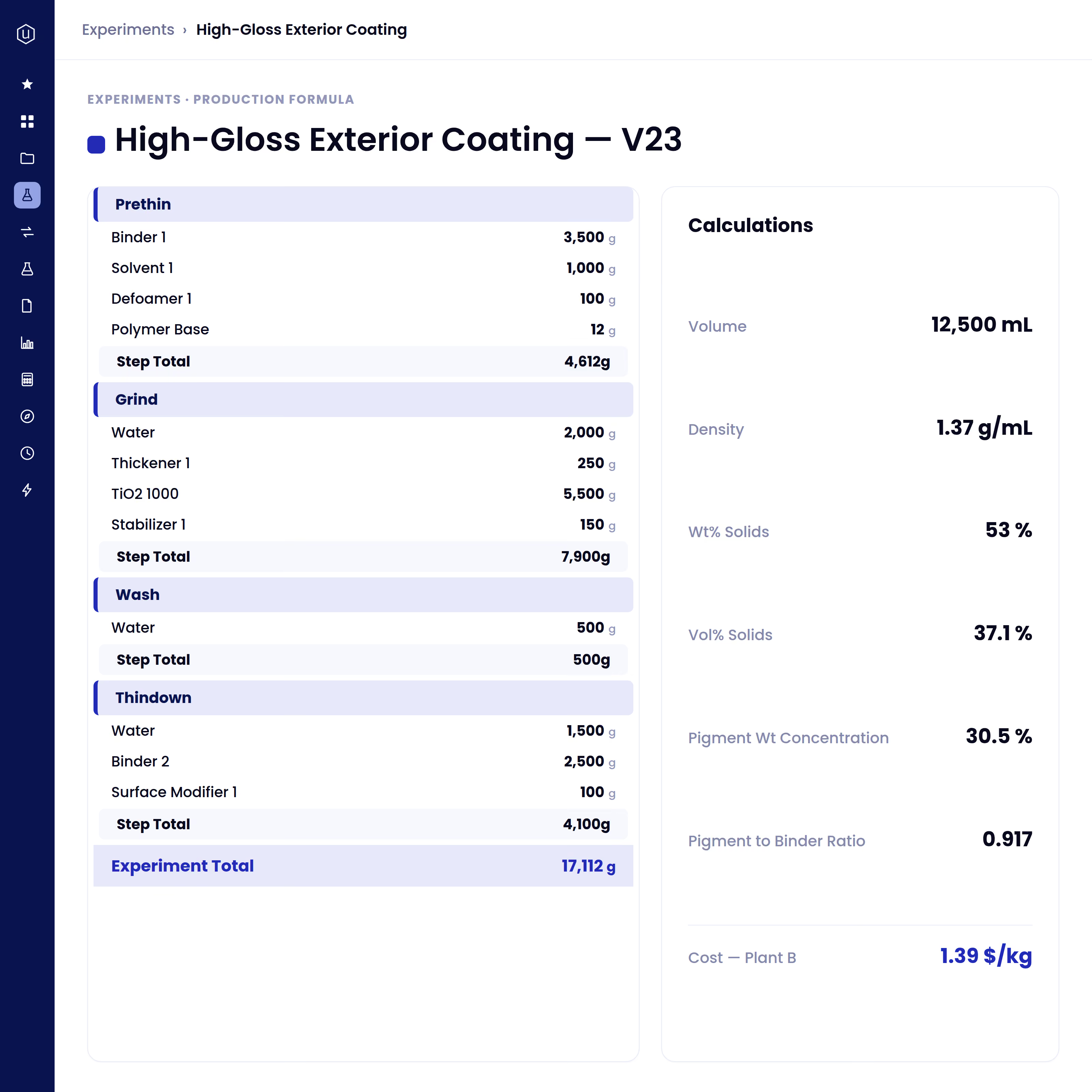
The bill of materials is built from the formulation or engineering design, not retyped from a file.
- Built from the source: Formulation BOMs come straight from the recipe grid. Engineering BOMs sync with your CAD and PDM systems.
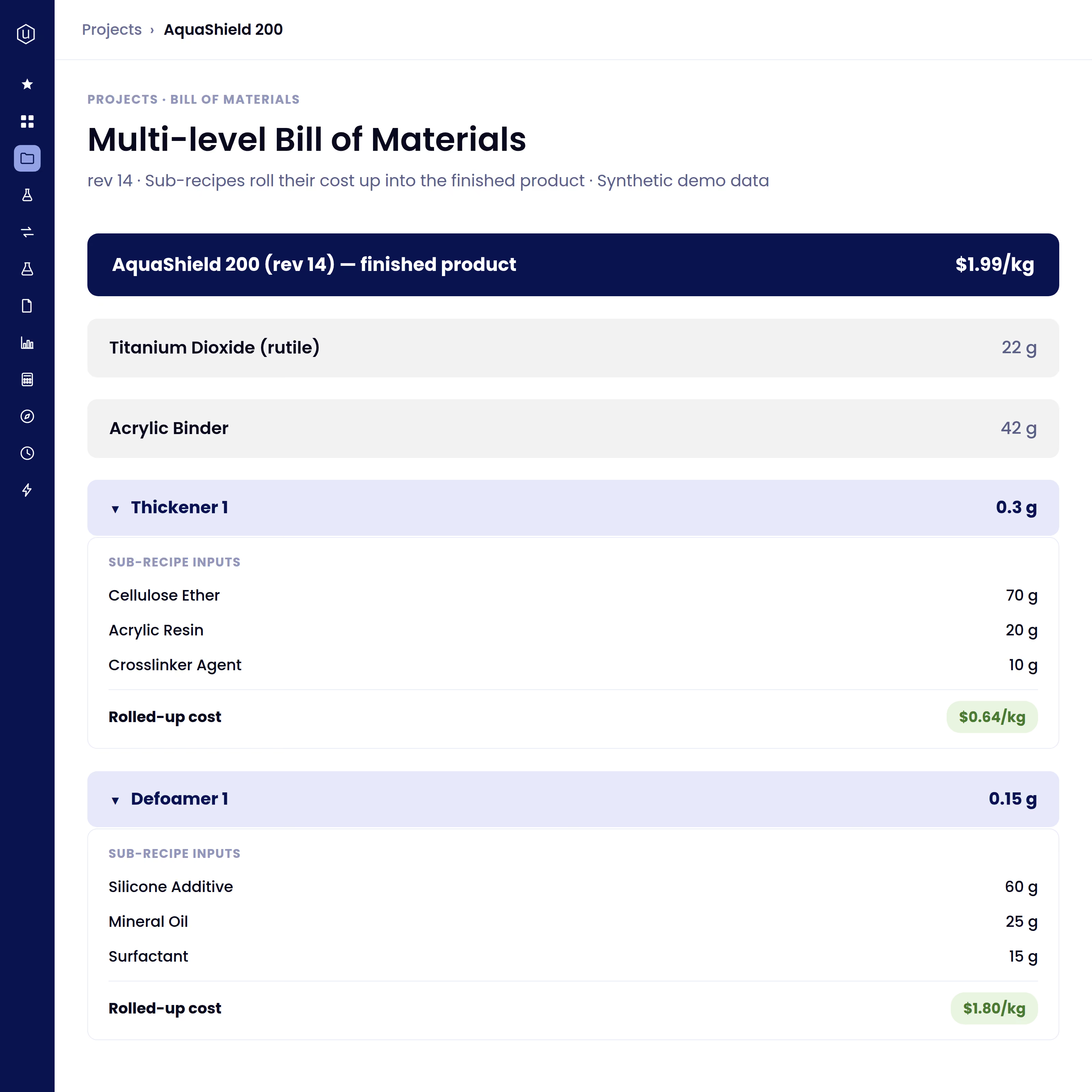
- Multi-level cost roll-ups: Sub-recipes and sub-assemblies roll up into the parent product, with cost per kilogram or per unit checked against target.
- Automatic repricing: When a raw-material or component cost changes, affected products reprice, and any below margin are flagged.
Hand Bodie the BOMs you already have. It reads them, creates the records, and loads them for you, so your first product record doesn't start from a blank page.
A discontinued ingredient or end-of-life part rarely affects one product. See the full scope before you commit.
- Where-used first: See every product, sub-recipe, sub-assembly, and specification an ingredient or part touches.
- Changes flow through: Update one ingredient or part, and every dependent product is updated.
- Traceable decisions: Each change carries its impact assessment, approvals, and the development work behind the replacement.
Ask Bodie "what uses this?" in plain language, and get the full list of affected products before anyone opens a spreadsheet.
A release carries its evidence, because development and the product record are the same record.
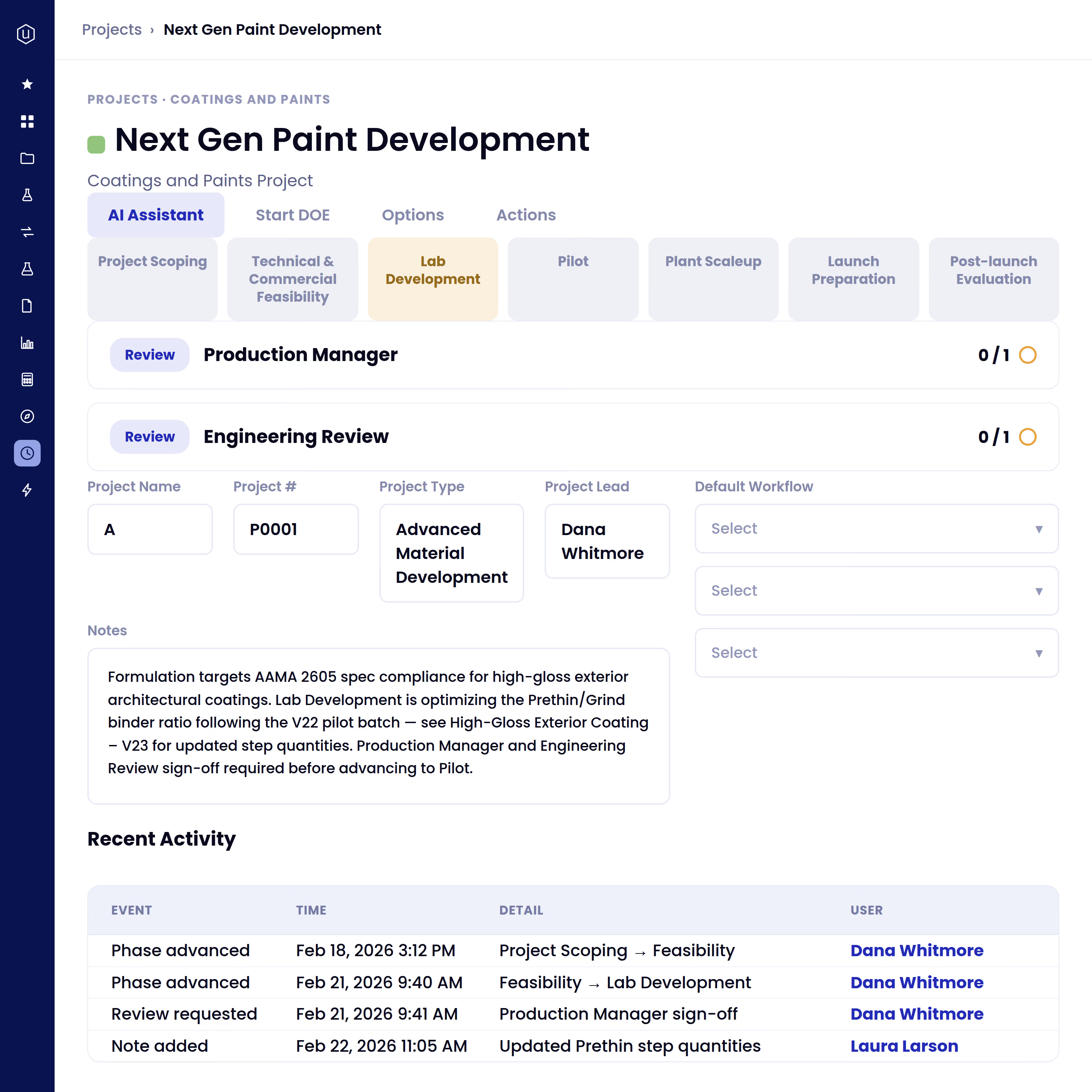
- Stage-gated release: Each stage enforces its reviews and required documents, so nothing advances on an undocumented decision.
- Locked, versioned releases: The released version is fixed, and any later change starts a new, traceable revision.
- Clean handover: Manufacturing and quality receive the formulation or design, results, and specifications on the same record, with nothing retyped.
Years later, anyone can open a released product and see exactly which experiments, results, and approvals put it on the market.
See CAD integration in action
Watch a CAD file, part number, revision history, live inside the same record as the formula it belongs to
Behr, by the numbers
How Behr Paint Company unified R&D and product approval workflows with Uncountable

5 labs
34 hrs
6 Steps
Connected to the systems you already run
Uncountable sits at the center as the system of record for R&D and quality data, with a comprehensive API and integration layer connecting the systems around it.
Where connected Product Lifecycle pays off
A raw material gets swapped in a formula. The new bill of materials rolls up cost and quantity automatically, so every downstream recipe that depends on it updates instead of drifting out of sync with a spreadsheet nobody else opens.
A formula is ready to move to the next phase. The project can't advance past its current phase until the required reviewers have actually signed off, and that record travels with it; no hallway conversation, no email asking who approved what.
A recipe is submitted for sign-off. Every revision, comment, and approval is logged against the formula itself, so anyone opening it later sees exactly which version was approved and by whom, instead of chasing down a printed spec routed for initials.
An intermediate used across multiple products gets updated. Cost and composition roll up through every parent recipe automatically, surfacing the full blast radius before you commit to the change, rather than leaving you to manually check which finished goods depend on it.
A formula moves from R&D to process chemists. The same formula record carries forward with its full history, so the receiving team works from the source of truth instead of a re-entered spec with a decimal point that didn't survive the copy.
A formula is ready to go live. The approved recipe releases straight into production with its full formulation and approval trail attached, so what runs on the floor matches what was signed off; no re-key into ERP, no hoping nothing was mistyped.
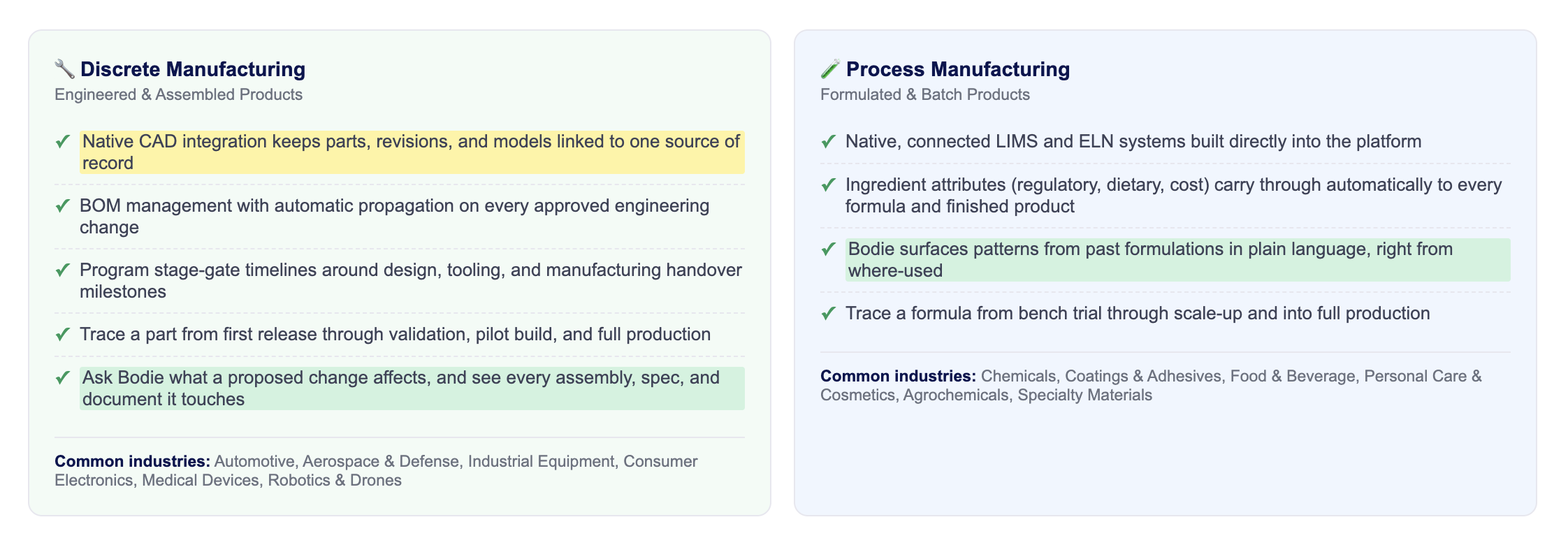
PLM, built for how you manufacture
Uncountable's PLM specializes in two kinds of manufacturing: formulations & process manufactured products and engineering & discrete manufactured products, each with its own workflows, vocabulary, and integrations. Find the one built for you.
Shared by every suite
Bodie and the Portal work across R&D, Quality, Product Lifecycle and Project Management at once, on the same structured data model.

Bodie, the AI Layer
The Uncountable Portal

.png)
Traditional PLM captures version history. We also capture how each version was developed.
Uncountable holds the development record and the version history on the same structured data model, for a recipe or an assembly alike, and that development layer is why the product record can answer why as well as what.
FAQs
Yes. The same structured, versioned bill of materials and where-used logic that connects a formulation to its raw materials works the same way for an assembled product and its parts, sub-assemblies, and specifications. Multi-level roll-ups, change propagation, and stage-gated releases behave identically whether the underlying record is a recipe or an engineering BOM.
The recipe grid is native rather than an add-on, so a formulation-based BOM is built from the formulation instead of retyped from a static file outside the system; for engineered assemblies, the eBOM connects to your CAD and PDM systems instead. Sub-recipes or sub-assemblies roll up into the parent product, quantities reconcile to the stated total, and each component stays connected to its underlying formulation, raw-material, or engineering records. Unit costs roll up to a cost per kilogram or per unit and are measured against the margin target, and a cost change reprices the affected products and flags any that fall below margin.
Sustainability and ESG sit on the same product record, with four views: profile, screening, measurement, and where-used. Recycled and bio content are modeled as a grade-level choice with a real cost trade-off, since bio grades typically cost more, and you can reformulate against a target directly on the record. Because composition, supplier information, and version history are already structured and connected, Uncountable supplies the verified product data that a Digital Product Passport, a lifecycle assessment, or a regulatory submission is built from.
Each ingredient is screened against market-specific regulatory limits on the same record as the formulation, with a pass or fail status shown at the ingredient level. Because it runs on the structured composition data already in the system, a market-compliance check doesn't require exporting the recipe to a separate tool.
No. The product record is the source of truth from development through commercialization. Production batch history lives in QC and your MES, and Uncountable connects to those systems rather than claiming to replace them.