
Electronics manufacturers need to make product decisions while component availability, approved manufacturer lists, firmware versions, compliance evidence, and manufacturing requirements continue to change.
A semiconductor discontinuation, revised passive component, alternate connector, firmware update, or supplier change can affect a PCB assembly, product revision, manufacturing test, regulatory documentation, repair procedure, and installed customer base. The operational challenge is determining the full impact of a change before it reaches production or the field.
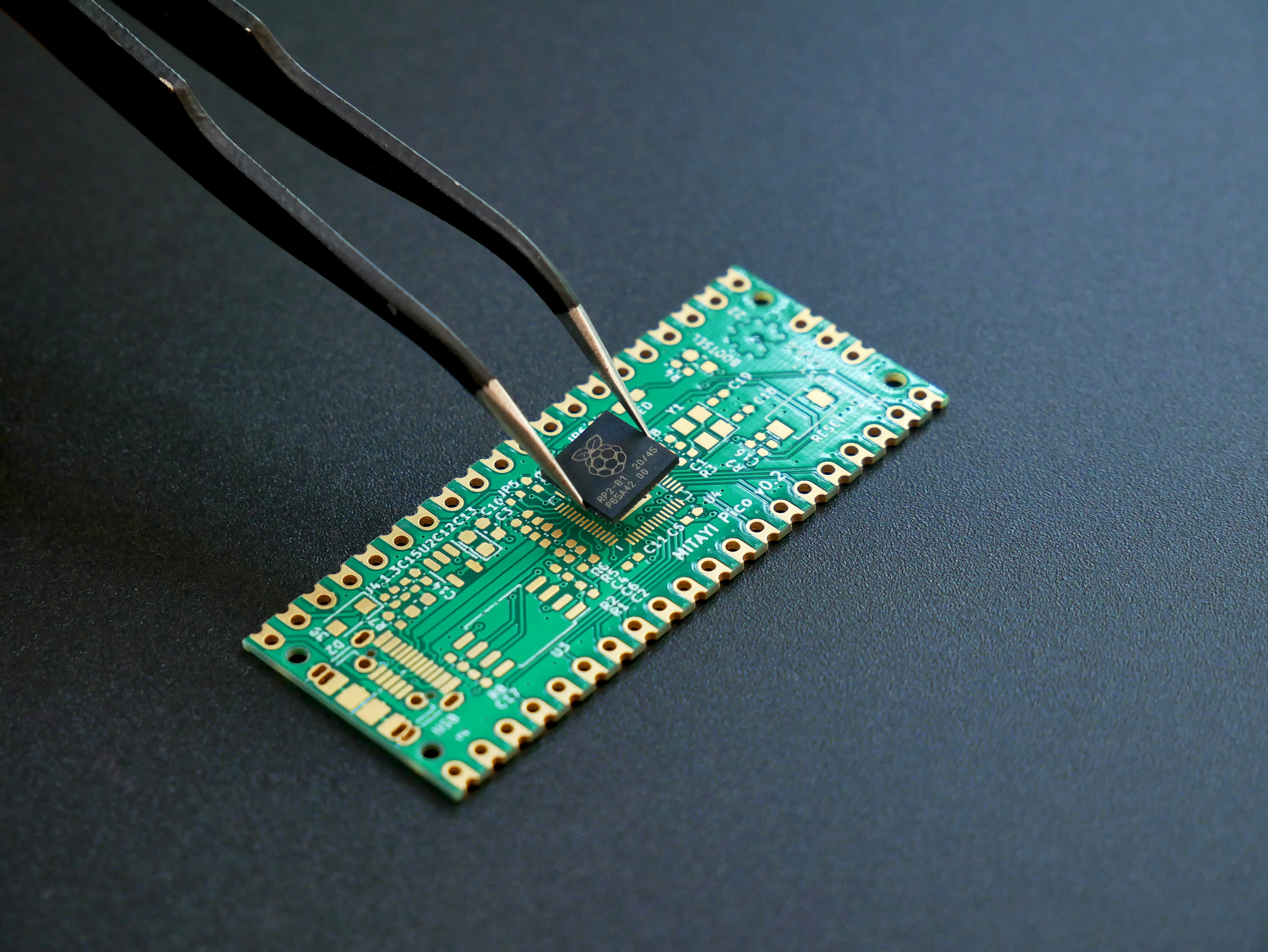
Electronics PLM connects the controlled product structure to approved components, alternates, supplier information, hardware and firmware versions, compliance documentation, manufacturing records, and change history. It gives engineering, supply, quality, manufacturing, and service teams a shared product context for evaluating change.
Component lifecycle is a product risk
Electronic products often depend on components with changing lifecycle status.
A manufacturer may receive notice that a microcontroller, power-management IC, memory device, connector, sensor, passive component, display, or radio module is approaching end-of-life. A distributor allocation, supplier quality issue, pricing shift, or manufacturing-site change can create similar pressure.
The first task is not to place a purchase order. It is to determine the product impact.
Teams need to know which assemblies use the component, which product revisions and customer configurations are affected, whether approved alternates exist, whether remaining inventory is available, and whether a substitute requires electrical, mechanical, thermal, firmware, test, compliance, or certification work.
PLM should connect component lifecycle information to product structures, approved manufacturer parts, supplier records, alternates, engineering revisions, test evidence, manufacturing instructions, service parts, and field populations. That connection helps teams prioritize the work before an obsolescence event turns into a production interruption or customer-support problem.
Manage approved alternates with evidence
An alternate component is not automatically a drop-in replacement.
A substitute may differ in electrical characteristics, package dimensions, thermal performance, supply behavior, firmware interaction, signal integrity, reliability profile, manufacturing yield, or compliance documentation. Even when the form, fit, and function appear similar, the organization may need verification, updated schematics, PCB changes, revised manufacturing tests, quality review, customer notification, or certification assessment.
A controlled alternate-qualification process should preserve:
- The approved manufacturer part number and supplier source.
- The affected component, PCB assembly, product revision, and product family.
- The technical rationale for the alternate.
- Electrical, mechanical, thermal, reliability, and manufacturing evidence where applicable.
- Firmware or software compatibility.
- Compliance and material documentation.
- Required engineering, quality, supply, manufacturing, regulatory, and customer approvals.
- Effective date, inventory disposition, and service implications.
The goal is not to slow response to supply disruption. It is to ensure the organization can make a fast decision with a complete view of the product relationships involved.
Connect hardware, PCB, firmware, and test evidence
An electronics product is more than a hardware BOM.
A released configuration may include component and assembly revisions, schematics, PCB layout and fabrication data, approved manufacturer parts, embedded software, firmware, calibration settings, test procedures, manufacturing instructions, and service documentation. These records need to remain connected because a change in one can affect the validity of others.
A revised microcontroller may require a new firmware build. A board-layout revision may require changed manufacturing tests. A firmware update may be compatible with some board revisions but not others. A new power component may alter thermal behavior and require a revised qualification result or operating limit.
PLM should make these relationships visible. Teams should be able to identify which firmware is approved for a particular assembly revision, which test procedure applies to a released configuration, and whether a component alternate changes the technical evidence needed for approval.
A software bill of materials is one useful part of the software record. NIST defines an SBOM as a formal record containing details and supply-chain relationships for components used to build software.
For electronics manufacturers, the larger requirement is connecting software records to the physical products, assemblies, and revisions they affect.
Make compliance evidence traceable to products
Electronics manufacturers commonly manage material declarations, component documentation, customer requirements, safety approvals, market-specific requirements, and controlled technical files.
The regulatory obligations that apply depend on the product, market, role in the supply chain, applicable rules, and current authoritative guidance. PLM does not replace regulatory expertise or a compliance-assessment process.
It can help teams maintain a controlled link between the product configuration and its supporting evidence. That may include component declarations, supplier documentation, test evidence, approvals, technical files, and customer-specific requirements.
When a component changes, reviewers should be able to identify the associated product revisions and documentation that may need reassessment. This reduces the risk that compliance or customer evidence remains attached to an older product configuration after engineering or supply has moved on.
Trace a supply change from component to customer
Consider a microcontroller that becomes unavailable.
The organization needs to determine which PCB assemblies use it, which finished products include those assemblies, which firmware versions are compatible, which manufacturing tests need to change, whether an approved alternate exists, what verification is required, and which shipped products may need future service support.
The decision can involve engineering, procurement, quality, manufacturing, firmware teams, regulatory specialists, customer-support teams, and external suppliers.
A connected PLM workflow should establish:
- The affected approved manufacturer part number, supplier source, and lifecycle status.
- Every affected assembly, PCB revision, finished product, customer configuration, and service part.
- Available inventory, approved alternates, and the evidence supporting an alternate.
- Related firmware, software, calibration, manufacturing test, and diagnostic requirements.
- Compliance documentation, certifications, customer requirements, and records that need review.
- Engineering, quality, supply, manufacturing, service, and customer approvals.
- The effective date for production and the disposition of inventory, work in process, shipped products, and field service.
This approach gives teams a common starting point. It does not remove technical validation, but it prevents the organization from discovering critical dependencies late in the change process.
Preserve manufacturing and service configuration
Electronics products can change between design release, production, shipment, repair, and field upgrade.
Manufacturing needs controlled work instructions, programming images, test procedures, approved component sources, labeling requirements, and effective-date controls. Service teams need to know which assembly revision, firmware version, replacement component, diagnostic procedure, and repair instruction applies to a particular customer product.
An as-built record captures the product configuration at manufacture. An as-maintained record captures changes made through repair, replacement, update, or retrofit. These records become important when a customer reports an issue, requests an upgrade, requires a replacement part, or receives a security or firmware update.
PLM can help maintain these relationships when it connects product structure, component identity, software version, manufacturing history, service action, and serial-level configuration. In practice, this often requires integration with ERP, manufacturing execution, quality, repair, and customer-service systems. The product identity and revision logic should remain consistent across those systems.
Test electronics PLM with an obsolescence event
Select an active electronics product with a component that has an approved alternate or identified lifecycle risk. Do not evaluate PLM with a generic sample BOM.
Ask each vendor to show:
- The approved manufacturer part number, supplier status, lifecycle information, and approved alternates.
- Every affected assembly, PCB revision, finished product, customer configuration, and service part.
- Compatible firmware, software, calibration, diagnostic, and manufacturing-test records.
- Relevant technical, quality, compliance, and supplier documentation.
- The engineering and quality evidence required to approve an alternate.
- The approval workflow across engineering, supply, manufacturing, quality, service, and customer teams.
- The approved effective date and treatment of inventory, work in process, future production, and field products.
- The resulting as-built and as-maintained product configuration.
If the answer requires manual exports, disconnected component databases, separate firmware records, and email approvals, the organization may be storing product data without maintaining a controlled product configuration.
Build a connected electronics product record
Electronics PLM should help teams manage the relationships that determine whether a product can be built, tested, shipped, supported, and changed safely: component lifecycle, approved sources, alternates, PCB and assembly revisions, firmware and software compatibility, compliance evidence, manufacturing tests, and service configuration.
When these records remain connected, teams can respond to obsolescence and supply disruption with a clearer view of product impact. They can preserve evidence behind alternate approvals, release the right configuration to manufacturing, and support customers with accurate service and upgrade information.
For a broader cloud-platform comparison, read Best Cloud PLM Software for R&D Data in 2026.
Schedule a demonstration with Uncountable to evaluate a component-obsolescence, alternate-qualification, hardware-software compatibility, or manufacturing-change workflow using connected product and technical data.
.png)
.png)
.png)
