
For product development organizations, digital transformation is often described in terms of new technologies: artificial intelligence, automation, analytics, connected laboratories, and modern quality systems. But the organizations best positioned to benefit from those technologies understand a more fundamental truth: transformation begins with the structure, accessibility, and continuity of their data.

Over the past seven years, I have supported large enterprises as they navigate the complexity of digital transformation. Since joining Uncountable earlier this year, I have seen the same challenge appear consistently across product development, R&D, and quality functions.
The AI conversation is accelerating. Leaders want to know how they can use AI to shorten development cycles, identify opportunities earlier, manage risk, and make better use of their accumulated technical knowledge. Yet the barrier is rarely the algorithm itself. More often, it is the underlying data.
Data is frequently unstructured, decentralized, and fragmented across the systems that support the product lifecycle. Experimental results may reside in laboratory notebooks, files, and specialist applications. Specifications may live in documents or spreadsheets. Quality teams may work in separate systems. Manufacturing, regulatory, and supply-chain information may be managed elsewhere again.
When product data is disconnected, it becomes harder for teams to find, interpret, trust, and reuse. And when the data foundation is weak, AI initiatives struggle to move from promising pilots to scalable operational value.
Why the pressure to transform is growing
The need to modernize product development is not driven by technology alone. Companies are responding to a combination of business, operational, and market pressures that make traditional ways of working increasingly difficult to sustain.
Competition is one clear factor. Rivals are shortening innovation cycles and bringing new products to market faster. If a company still requires two or three years to develop, test, approve, and launch a product, it risks losing ground to organizations that can iterate more quickly and reuse knowledge more effectively.
Regulatory complexity is another. As companies expand into new geographies, develop more sophisticated products, and face evolving compliance expectations, they must manage a growing body of product, ingredient, specification, quality, and documentation requirements. That information cannot remain scattered if teams need to make confident, defensible decisions at speed.
Supply-chain volatility is adding further pressure. Material disruptions, changing availability, pricing fluctuations, and wider geopolitical uncertainty can force companies to reassess formulations, sources, and production plans at short notice. Responding effectively requires product teams to understand the full context of a formulation: its ingredients, substitutes, performance requirements, quality implications, and regulatory constraints.
Then there is the challenge of knowledge loss. Many experienced scientists, formulators, quality professionals, and technical leaders have spent a decade or more building deep, practical understanding of their products and processes. When they retire, move roles, or leave the organization, valuable knowledge can leave with them, particularly when insights exist only in personal files, inconsistent documentation, disconnected systems, or individual experience.
That loss is not simply a workforce issue. It is a data and business-continuity issue.
The cost of a broken digital thread
The consequences of fragmented data become most visible at the handoffs between teams.
From R&D and the laboratory through to quality, manufacturing, and commercialization, many organizations still rely on manual processes to transfer critical information. Data is copied from one system to another. Specifications are recreated or updated manually. Changes are communicated through emails, spreadsheets, shared drives, and meetings. Context is lost as a product moves from early development into scale-up and ongoing quality control.
The result is a broken digital thread.
When information is duplicated or re-entered across separate systems, organizations introduce delay and increase the risk of error. They also make traceability more difficult. A quality issue or customer complaint may require teams to trace a product back through batches, specifications, raw materials, test results, development decisions, and process changes. If those records are scattered, root-cause analysis can take days, weeks, or even months.
That level of delay is increasingly hard to accept. Teams need the ability to understand what happened, where a change occurred, and what other products or processes may be affected in minutes, not after extended manual investigation.
Version control is another common problem. Product organizations often manage numerous specifications, formulations, ingredient lists, and related documents, each with its own naming conventions and locally maintained versions. Teams may not be certain which document is current, which formulation version is approved, or whether a change has been reflected consistently across every downstream record.
A filename is not version control. Nor is a static document, however carefully maintained.
From static records to connected product data
Traditional bills of materials and formulation records were not designed for the pace and complexity of modern product development. Static PDFs and spreadsheets can document what a product contained at a particular point in time, but they do not reliably capture the dynamic relationships between ingredients, formulation changes, experimental results, specifications, quality data, and approval workflows.
Modern product organizations need a more connected approach.
A dynamic bill of materials should be linked directly to the ingredients, formulations, R&D data, specifications, and quality records that give it meaning. When a material changes, the relevant connected records should be visible. When a formulation is updated, teams should be able to identify the approved version, understand why the change was made, and trace the impact through the product lifecycle.
This is where a unified data platform becomes critical. Rather than connecting a collection of point systems through manual exports and re-keying, organizations can establish a shared, structured data layer across R&D, quality control, product lifecycle management, and related workflows.
Uncountable is designed around this principle: unifying R&D, QC, and PLM data across the product lifecycle so teams can work from one connected record rather than stitching together spreadsheets, standalone systems, and disconnected documentation. The platform brings structured data, product context, and AI capabilities together to support traceability, compliance, faster decisions, and more effective knowledge reuse.
Structure first, AI second
AI has substantial potential in product development. It can help teams search and summarize technical information, surface relevant past experiments, identify patterns, support root-cause investigations, analyze relationships across data sets, and accelerate reporting and decision-making.
But AI is only as useful as the data it can access and understand.
If critical information is unstructured, inconsistently named, trapped in static files, or fragmented across separate applications, AI cannot reliably connect the necessary context. The result may be incomplete analysis, limited trust, and isolated use cases that fail to create sustained enterprise value.
The better approach is to structure and connect the product data first. When R&D, quality, and PLM teams work from a shared data model, context does not disappear during handoffs. Teams can search for a past experiment, formulation, ingredient, property, quality result, or specification without depending on a particular file name or an individual’s memory. AI can then operate on the organization’s real product history rather than on a partial and disconnected subset of it.
That is the difference between AI as an aspiration and AI as a practical capability embedded in day-to-day work.
A foundation for faster, more resilient innovation
Digital transformation is not about implementing technology for its own sake. It is about enabling product-development organizations to respond faster, preserve knowledge, manage complexity, and make more confident decisions.
A unified data platform helps create that foundation by connecting the full product lifecycle: from the first experiment and formulation decision through quality control, change management, scale-up, and commercialization. It replaces manual handoffs with connected workflows, brings traceability into the underlying data model, and makes institutional knowledge easier to discover and reuse.
For companies pursuing AI, the question is therefore not simply, “Which AI tool should we adopt?” It is more fundamental:
Is our product data structured, connected, and governed well enough for AI to deliver dependable value?
The organizations that answer yes will be better positioned to shorten innovation cycles, protect hard-won expertise, manage quality and regulatory risk, and turn AI investment into measurable product-development progress.
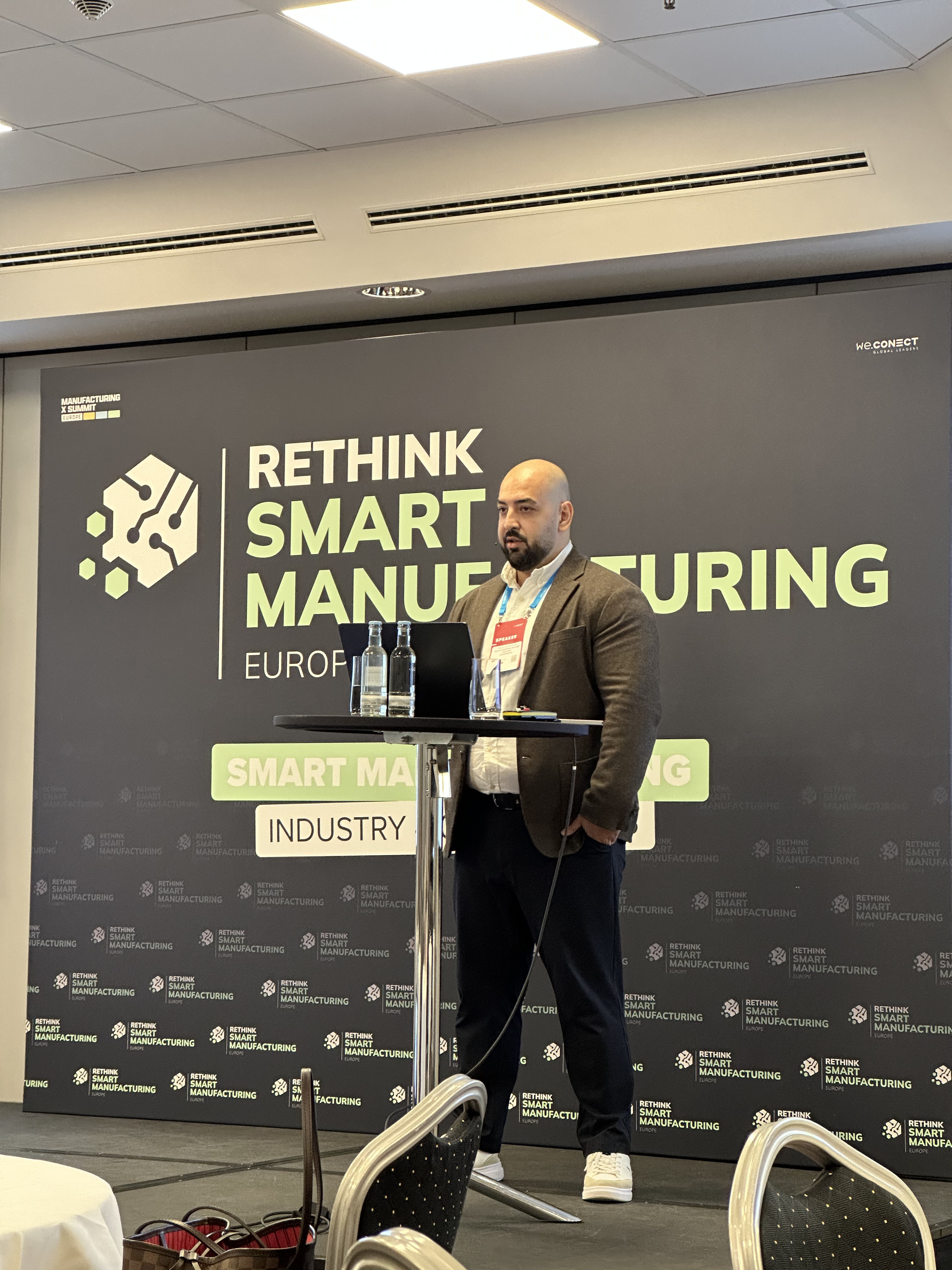
This article is adapted from a presentation delivered by Uncountable at Rethink! Smart Manufacturing Europe 2026, exploring how connected R&D data creates the foundation for practical, scalable AI in formulation and materials development.
Is your R&D data ready for AI? If your scientists still need to search across disconnected systems to understand a product’s experimental history, quality status, regulatory context, and formulation performance, it may be time to establish a more connected data foundation. Contact Uncountable to explore how a unified R&D platform can help your teams accelerate formulation development, make better-informed decisions, and put AI to work on trusted product data.
.png)

.png)
